Key takeaways
- The Thunderbolt is a 188-foot shipwreck sunk in 1986, sitting upright in up to 120 feet of water south of Marathon. It’s one of the few Florida Keys wrecks that still reads as a recognizable ship.
- Advanced certification is the minimum, but recent deep-dive experience matters more than the card.
- You can have an excellent dive without penetrating the wreck. Bronze propellers, a cable-laying spool, the wheelhouse, and abundant marine life are all accessible from the exterior.
- Booking with a Marathon-based operator like Captain Hook’s means local departure, crew that dives the site regularly, and honest go/no-go guidance based on conditions.
- If the Thunderbolt is a stretch right now, reef dives and shallower Keys wrecks are the right bridge.
If you’re down to one advanced dive day in Marathon, this is the decision that matters. Do you book a reef trip that feels familiar, or do you drop onto one of the Florida Keys’ most recognizable shipwrecks? The Thunderbolt is popular for a reason. It sits deep, upright, and intact just south of Vaca Cut, with the kind of large-scale profile that gives you that “this is why I came to the Keys” feeling the moment it comes into view. But this is also where a lot of articles stop short. They tell you it’s iconic, then leave you to figure out whether it’s actually the right fit for your certification, comfort level, and trip goals. This guide explains what makes the Thunderbolt so memorable, who it’s genuinely best suited for, and what to know before you book.
Book Your Dive Trip in Marathon with Captain Hook’s
Why the Thunderbolt is the Marathon Wreck Divers Talk About
The Thunderbolt isn’t just another artificial reef on a long list of Florida Keys wreck diving sites. It’s a big, upright shipwreck with presence. Scuba Diving describes it as a 188-foot ship and “the queen of the Marathon wreck fleet,” which matches how many of our customers tend to talk about it when they’re picking one standout wreck in the Middle Keys.
The history adds to the pull. The Thunderbolt was purchased by the Artificial Reef Committee of the Florida Keys, cleaned, prepared, towed south of Vaca Cut, and sunk on March 3, 1986 in 115 feet of water. It’s still upright and intact today, which matters more than it sounds. An upright wreck gives you a clearer visual reference, more recognizable lines, and a more satisfying exterior tour than a site that’s collapsed into a low-profile pile.
Who This Dive is Best Suited For
Thunderbolt wreck diving is best for divers who are comfortable with advanced profiles. The depth runs roughly 108 to 120 feet, and advanced certification is the standard minimum. Certification and readiness aren’t always the same thing. A dive at this depth requires solid buoyancy control, comfort with descent and ascent discipline on a line, steady air awareness, and enough recent experience that task loading doesn’t spike the moment you reach the wreck.
“Advanced recommended” deserves more than a throwaway sentence. If your last several dives were shallow reefs with long bottom times, the Thunderbolt may feel like a big jump. Deep wreck diving means less time to settle in, less room for sloppy trim around structure, and less margin for distractions like following a fish off in the distance. That doesn’t make this dive extreme. It just rewards divers for whom the basics already feel automatic.
A common mistake is booking because the wreck is famous and then treating it like a casual sightseeing dive. That’s when divers burn through air early, rush descent decisions, or get so absorbed in the scale of the site that they lose track of depth and buddy position. The Thunderbolt delivers on the Florida Keys scuba experience but it does require a level of respect.
What You’ll See Underwater
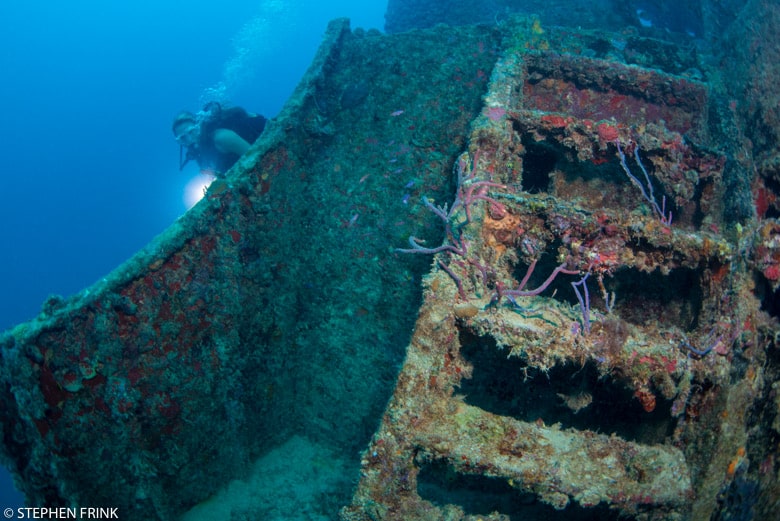
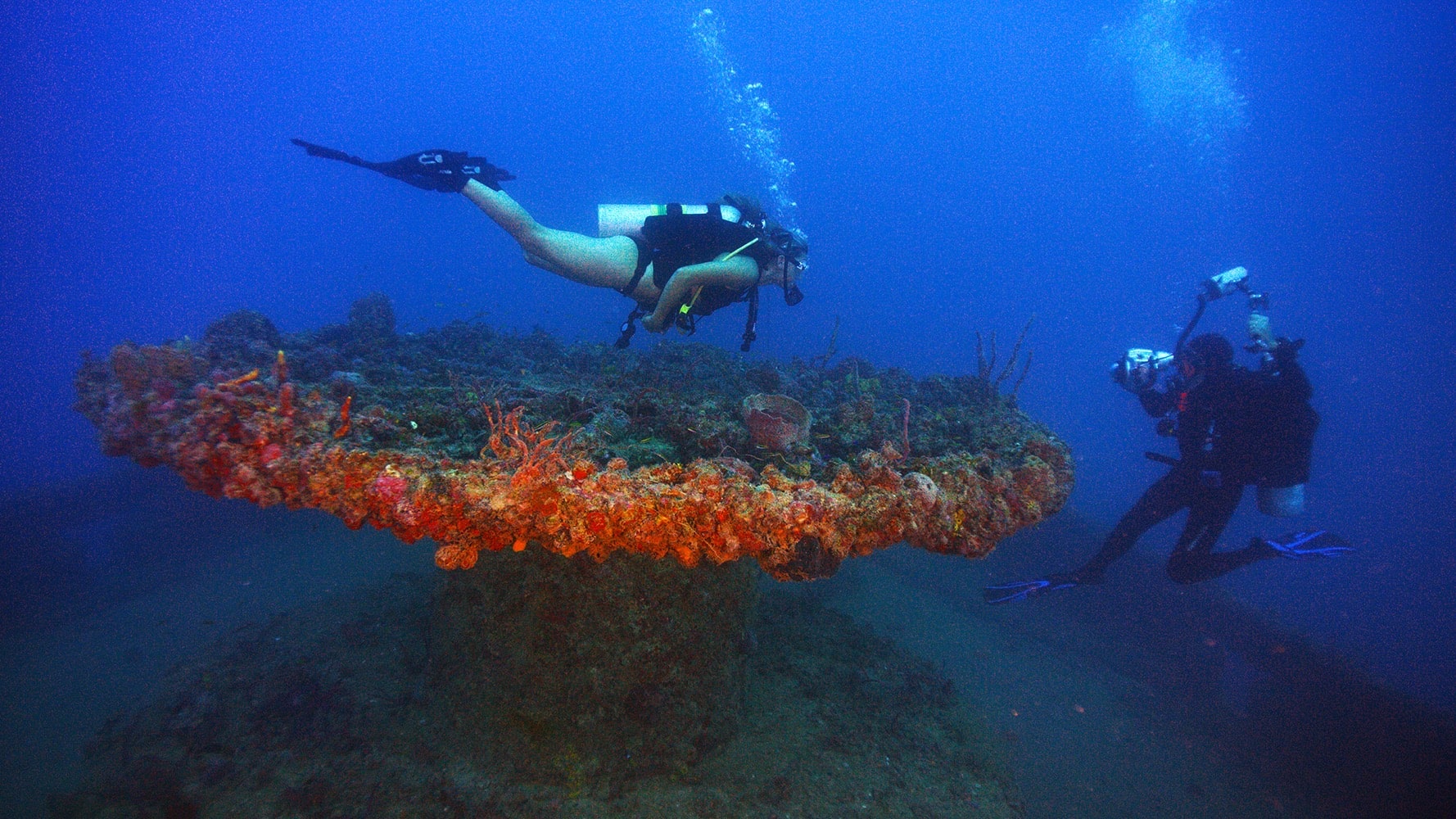
The Thunderbolt has the kind of structure divers love because you can clearly recognize it as a ship. Divers can see the bronze propellers, the large cable-laying spool, the wheelhouse area, and abundant marine life across the deck. Not every wreck gives you obvious focal points. On the Thunderbolt, you’re not drifting over vague metal forms wondering what you’re looking at. You can move from feature to feature and feel the story of the vessel as you go.
Conditions are part of the experience as well. There’s a permanent buoy on the site, visibility ranging from 50 to 100 feet, and a light current usually present. Good visibility can make the wreck reveal itself early in the drop. Tighter visibility means you may not get the full ship view until you’re much closer, which can catch divers off guard if they were expecting a dramatic reveal from far above.
Big grouper and schools of fish are common on the site. Marine life is part of the appeal, but the wreck is the headline. Some divers book a deep wreck expecting a reef-style fish parade. What makes the Thunderbolt memorable is the combination of ship structure, coral growth, and a ton of different marine life.
Because it’s a deeper dive, small inefficiencies matter more. Buoyancy swings cost extra attention. Slow descents eat into useful time at the structure. Poor trim near the wreck means unnecessary contact risk. These aren’t reasons to avoid the dive but they’re reasons to show up ready for the experience it actually is.
Thunderbolt vs other Florida Keys Dives
If you’re choosing between a few trips, the right answer depends on what kind of dive day you want. Use this as a quick check before you book.
| Dive option | Best fit | How it compares to Thunderbolt |
|---|---|---|
| Marathon reef dive | Divers wanting color, shallower profiles, and a more relaxed day | Great for easing in, but won’t deliver the same big-shipwreck feel or deep advanced profile. |
| Thunderbolt wreck | Advanced divers who want the signature wreck dive | The strongest pick when your goal is a classic scuba diving wreck with a recognizable ship structure. |
| Adolphus Busch Sr. | Divers exploring Lower Keys wreck options | A solid alternative if your trip is centered closer to Big Pine Key rather than Marathon. |
| Vandenberg or Cayman Salvager | Divers planning around Key West wreck diving | Better fits if your base is Key West. Thunderbolt makes more sense when your trip is Marathon-centered. |
If you want a marquee wreck dive in Marathon, this is the pick. If you’re still building confidence or want more bottom time at a less demanding depth, a reef dive is the better move. Want some other options? Our guide to the best places to dive in the Florida Keys covers the full range across skill levels.
Why Book the Thunderbolt with Captain Hook’s
If you’re an advanced diver staying in or near Marathon, the question isn’t just whether the wreck is worth it. It’s whether the operator knows the site well enough to make the day work. Captain Hook’s is Marathon-based and has been voted the best dive shop in Marathon countless times. This means local departure (no driving across the Keys to a different marina), a crew that knows how the site dives in different conditions, and briefings that match the actual experience you’re about to have not a generic deep-wreck script.
We’ll also give you a clear path if you’re not quite ready for Thunderbolt yet. Build comfort with other dive trips, get more recent deep-dive reps, then come back when it’s the right fit. That’s a better outcome than pushing a dive before it feels right.
Frequently Asked Questions
How deep is the Thunderbolt wreck?
The Thunderbolt sits upright on a sand bottom with a maximum depth of around 115–120 feet. The top of the superstructure comes up to roughly 80–90 feet, so you’ll spend most of a standard dive moving across a range of depths rather than hovering at the bottom the whole time.
What certification do you need to dive the Thunderbolt?
Advanced Open Water is the standard minimum. That said, certification alone isn’t the deciding factor. Recent experience at depth, solid buoyancy control, and comfort with gas management matter more in practice. If your advanced card is current but your last few dives were shallow reefs a year ago, a refresher dive first is a smart call.
Can you go inside the Thunderbolt?
Some areas of the wreck are accessible as swim-throughs, but true penetration into enclosed overhead spaces requires proper wreck training, experience, and equipment beyond recreational open-water certification. The exterior dive is a complete experience on its own and what most recreational divers focus on.
How long is your bottom time on the Thunderbolt?
On a standard recreational dive computer profile at this depth, you’re typically looking at 10–20 minutes of comfortable bottom time for most divers before starting your ascent. It goes quickly, so knowing which parts of the wreck you’re prioritizing before you hit the water makes a real difference. Our divemaster helps with this.
What’s the best time of year to dive the Thunderbolt?
The Thunderbolt is diveable year-round. Summer months tend to bring calmer seas and warmer water, while winter can offer excellent visibility with slightly cooler temperatures. Conditions vary trip to trip regardless of season. Current, visibility, and marine life change day to day, which is part of what makes it a real ocean dive.
Check Availability for the Thunderbolt Wreck Dive
If you’re an advanced diver looking for the iconic Marathon wreck, the Thunderbolt belongs high on your Florida Keys list. It’s deep, memorable, and gives you something reef diving can’t: the feeling of moving around a real ship while you’re surrounded by Florida Keys aquatic life.
When you’re ready to dive, Check availability and book your Thunderbolt wreck dive.