
Key takeaways
- A boat-day bag and a travel bag solve two different problems, so a lot of divers end up happiest with a simple two-bag setup.
- For a Florida Keys charter you want a bag that handles wet gear cleanly; for the trip down you want structure and organized carry.
- Our Cressi lineup leans waterproof containment over open mesh.
- Lay out a real packing list before you buy, including the items you always forget.
- The features that matter — opening shape, carry comfort, zipper feel, fin clearance — are the ones easiest to judge in person.
You’ve hauled your gear to the dock thinking one bag should do it all, only to end up wrestling a soggy mess by the end of the day. You’re not alone. A lightweight, breathable bag sounds like the obvious answer for a boat, but that doesn’t automatically make it the right bag for every part of your trip. Florida Keys diving has two very different moments: getting your gear to the boat and through the day, and getting everything to the Keys in the first place. Those jobs don’t always belong to the same bag. That’s where a lot of divers get stuck, especially when they’re comparing Cressi options and trying to decide whether one wet-gear bag, a structured travel bag, or a two-bag setup makes the most sense. Below, you’ll get a practical breakdown of when a boat bag earns its space, when a travel bag is the smarter call, and which Cressi bags we actually stock for each job, so you can choose the setup that fits your next Florida Keys dive day without overbuying.
The Bag Question Most Divers Get Backwards
The mistake is treating “dive bag” like one category. A bag that works beautifully from the parking lot to the boat can be annoying at the airport. A scuba diving travel bag that protects and organizes your kit on the way down to the Keys can be more bag than you want on a sunny two-tank reef charter. So instead of asking, “What’s the best dive gear bag?” start with this: what job does this bag need to do?
- For a boat day, you want fast loading, easy rinsing, and a bag that keeps wet gear from soaking everything it touches.
- For trip travel, you want structure, organization, protection, and something easier to move through cars, hotels, and airports. Different jobs, different designs.
That’s why a lot of divers end up happiest with a two-bag system: a travel dive bag for the trip and a dedicated wet bag for the boat. You don’t always need both, but it’s worth knowing when each one earns its space.
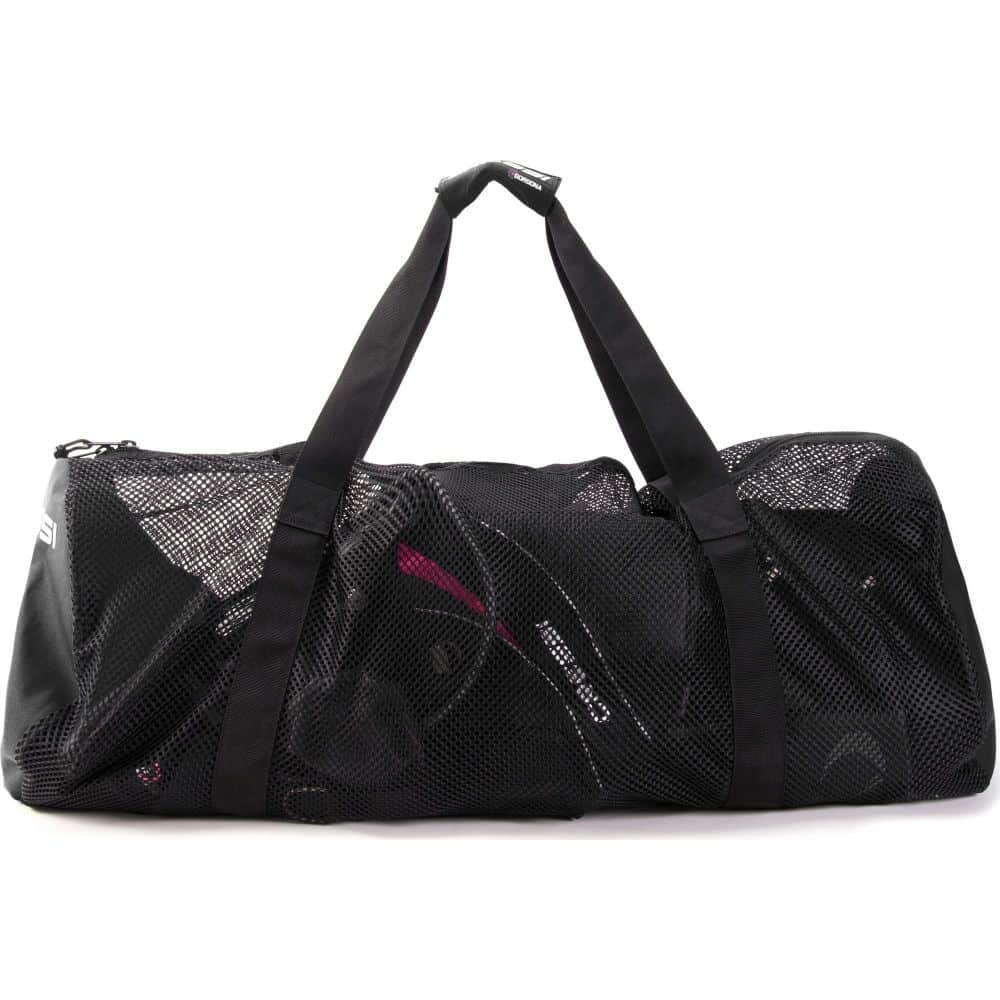
Where a Wet Bag Shines on a Florida Keys Boat Day
On a warm-water charter you aren’t packing thick cold-water exposure gear or trying to protect your kit from airline handling. You’re organizing the pieces you need for the day and making sure wet gear has somewhere sensible to go afterward. There are two schools of thought on boat-day bags, and it’s worth knowing the difference before you buy.
| Boat-day need | What to look for | Where to be careful |
|---|---|---|
| Wet gear handling | Open mesh drains and airs gear out; a waterproof roll-top instead seals the wet mess in so it never reaches your other bags. | Mesh won’t keep anything dry, and a sealed bag needs airing out at home so gear doesn’t sit damp. |
| Quick loading | A wide opening or full-length zipper makes it easier to drop in fins, exposure gear, and small accessories. | Overstuffing strains zippers and makes the bag awkward to carry. |
| Rinse workflow | A smooth, wipe-clean surface is easy to manage around rinse bins and dockside cleanup. | Small items shift around if the bag has no pockets or internal organization. |
| Boat deck practicality | A simple bag that packs flat or tucks away is easier to keep out of the way than a bulky travel case. | Not every boat has the same storage setup, so compact, tidy packing still matters. |
Mesh is easy to love because it’s light and it drains, but it also lets salt water drip through onto whatever is nearby. That’s why the Cressi bag we stock for boat days goes the other direction: the Cressi Gavone is a waterproof roll-top that contains moisture completely, so a wet wetsuit and dripping fins never end up soaking the dry clothes in your trunk or the gear stacked next to you on deck. Its smooth tarpaulin surface hoses off in seconds, and the rigid upper rim holds the bag open while you load it.
If you’re booking a dive with us, you can think through your bag choice alongside the actual trip you’re taking. A relaxed reef dive, a wreck charter, and a snorkel outing don’t always call for the same packing style. You can explore upcoming options on our Florida Keys scuba diving trips page before deciding how much bag you really need.
Where a Boat Bag Falls Short for Travel
A simple wet bag is easy to love. It’s light, practical, and purpose-built for the dock. It also isn’t magic. If you try to make one bag do every travel job, the weaknesses show up fast.
A dedicated wet bag usually gives you less structure than a travel bag. That matters when you’re packing regulators, accessories, clothes, and personal items together. It also gives you less separation. Wet items, dry items, soft goods, and smaller accessories can all end up in the same shifting pile unless you add packing cubes, pouches, or separate dry storage.
Then there’s protection. A flexible bag is fine from car to dock, less so when it’s being loaded into a vehicle, stacked with other luggage, or moved through airport-style travel. If you’re bringing delicate or expensive gear, you need to think past “will it fit?” and ask, “how will it ride?”
That doesn’t mean a wet bag is bad for travel. A lot of divers pack a smaller wet bag inside a larger travel bag so they’ve got a lighter boat-day option once they arrive. That’s often the sweet spot: use the travel bag to get here, then use the wet bag for the charter.
What a Travel Bag Does Better
A scuba dive bag built for travel is less about drainage and more about control. It keeps your gear together, moves more comfortably over longer distances, and separates items that shouldn’t all live in one open compartment.
| Travel need | Why a travel bag helps | Cressi option that fits |
|---|---|---|
| Longer transfers | Structured handles, straps, or a backpack carry make moving gear easier. | The convertible Walrus switches between backpack and duffel on the fly. |
| Gear organization | Full-panel openings and pockets separate accessories and soft goods. | The 45L Olimpia opens wide for fast, visible packing. |
| Hauling a full kit | High capacity and a wearable carry help when you’re moving everything at once. | The 80L waterproof Gorilla Backpack swallows a complete scuba setup. |
| Mixed travel items | A dedicated travel bag is better when dive gear shares space with clothes or personal items. | The Olimpia and Walrus both handle apparel and gear in one carry. |
The best travel dive bag for you depends on how you move. If you’re flying into the Keys with a full kit, you’ll care more about structure and handling, and something like the Gorilla or Olimpia earns its keep. Driving down for a weekend with just personal snorkeling gear? The Walrus or a simpler setup is probably plenty.
The Cressi Bags We Stock at Captain Hook’s
Here’s the full lineup we carry right now, lined up by the job each one does best. If you’re not sure which fits your trip, the quickest way to decide is to bring your actual kit by the shop and try loading it.
| Bag | Price | Best for |
|---|---|---|
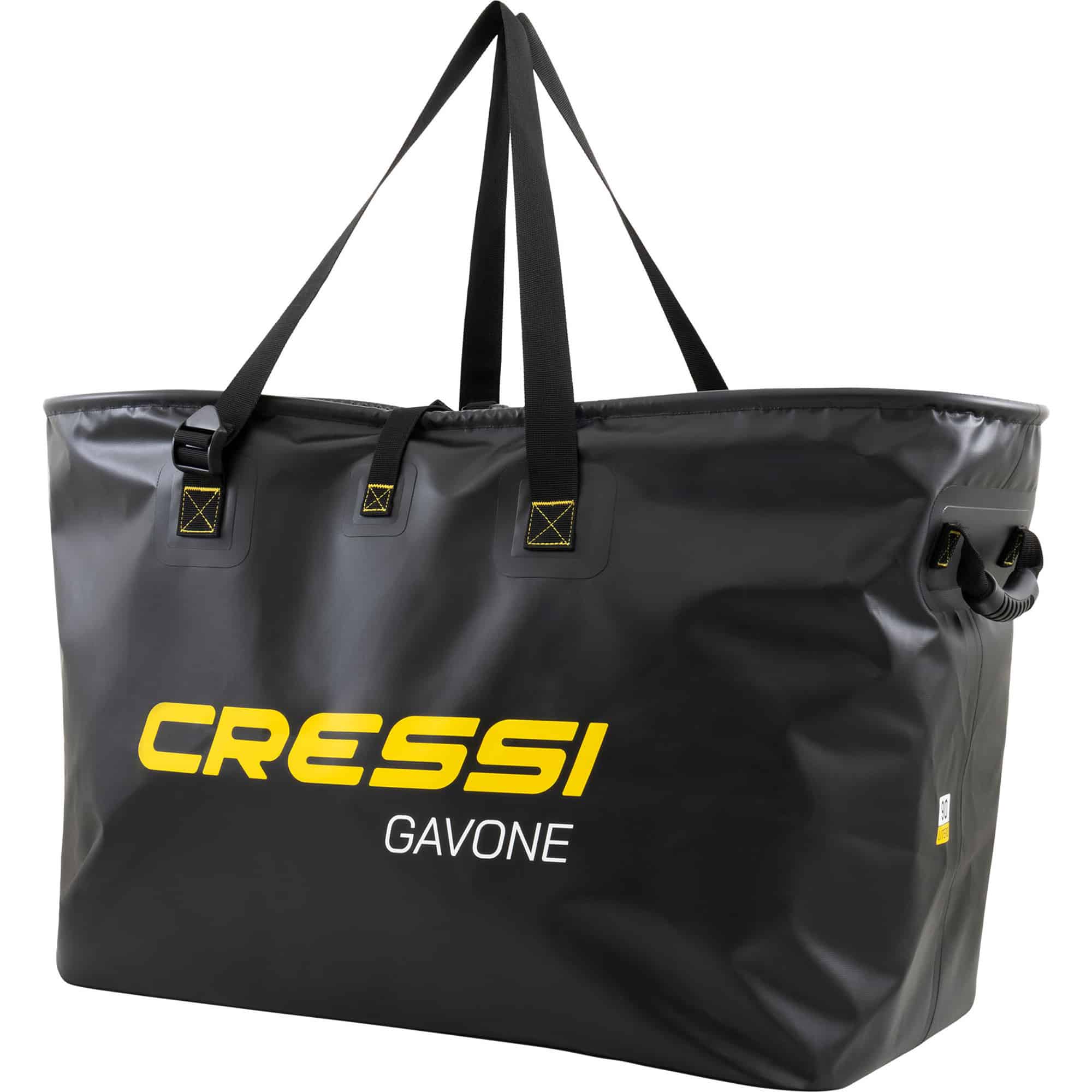 Cressi Gavone Cressi Gavone |
$79.95 | Boat days: a waterproof roll-top that seals wet gear so it never soaks the rest of your kit |
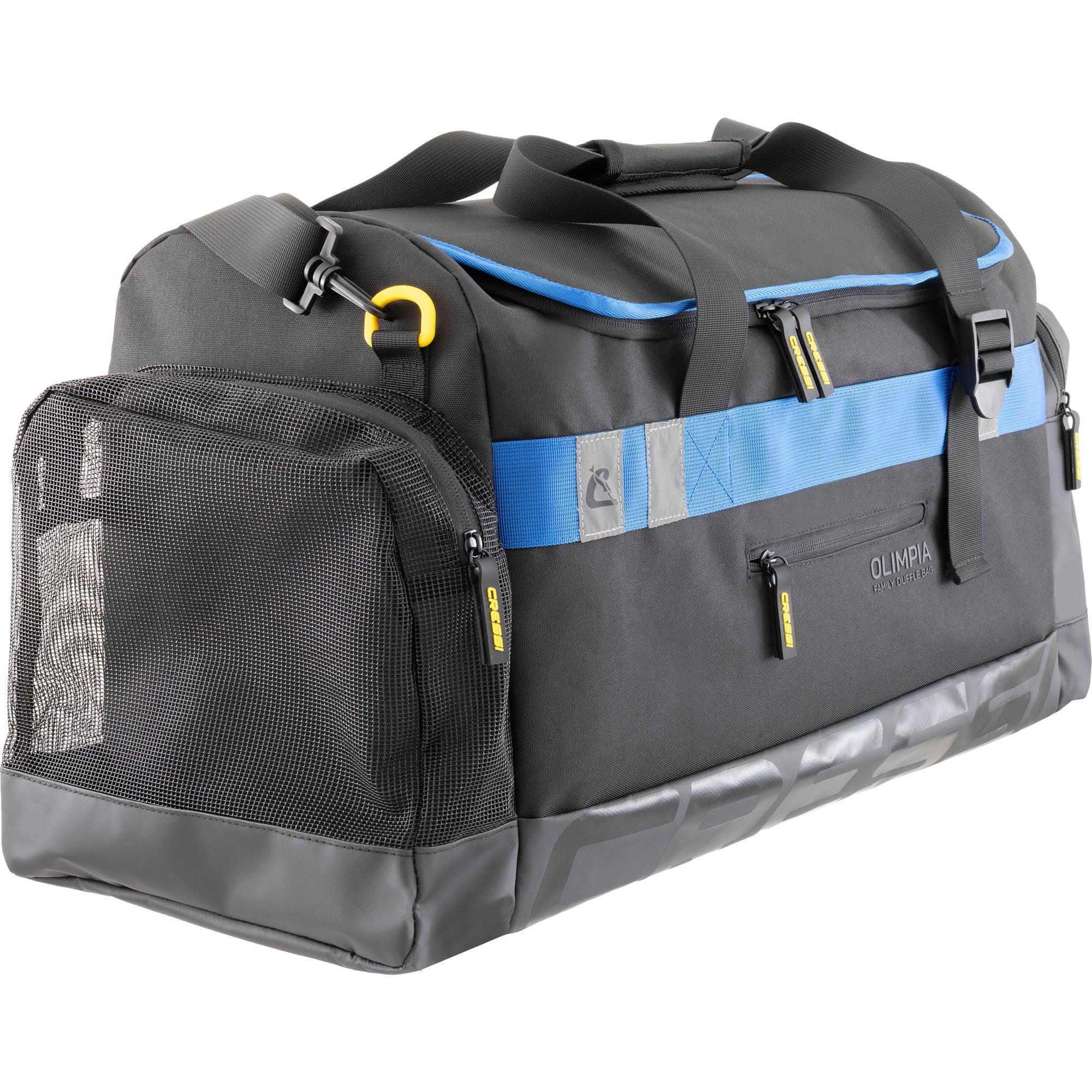 Cressi Olimpia (45L) Cressi Olimpia (45L) |
$79.95 | Packing a full kit for the drive or flight down, with a wide full-panel opening |
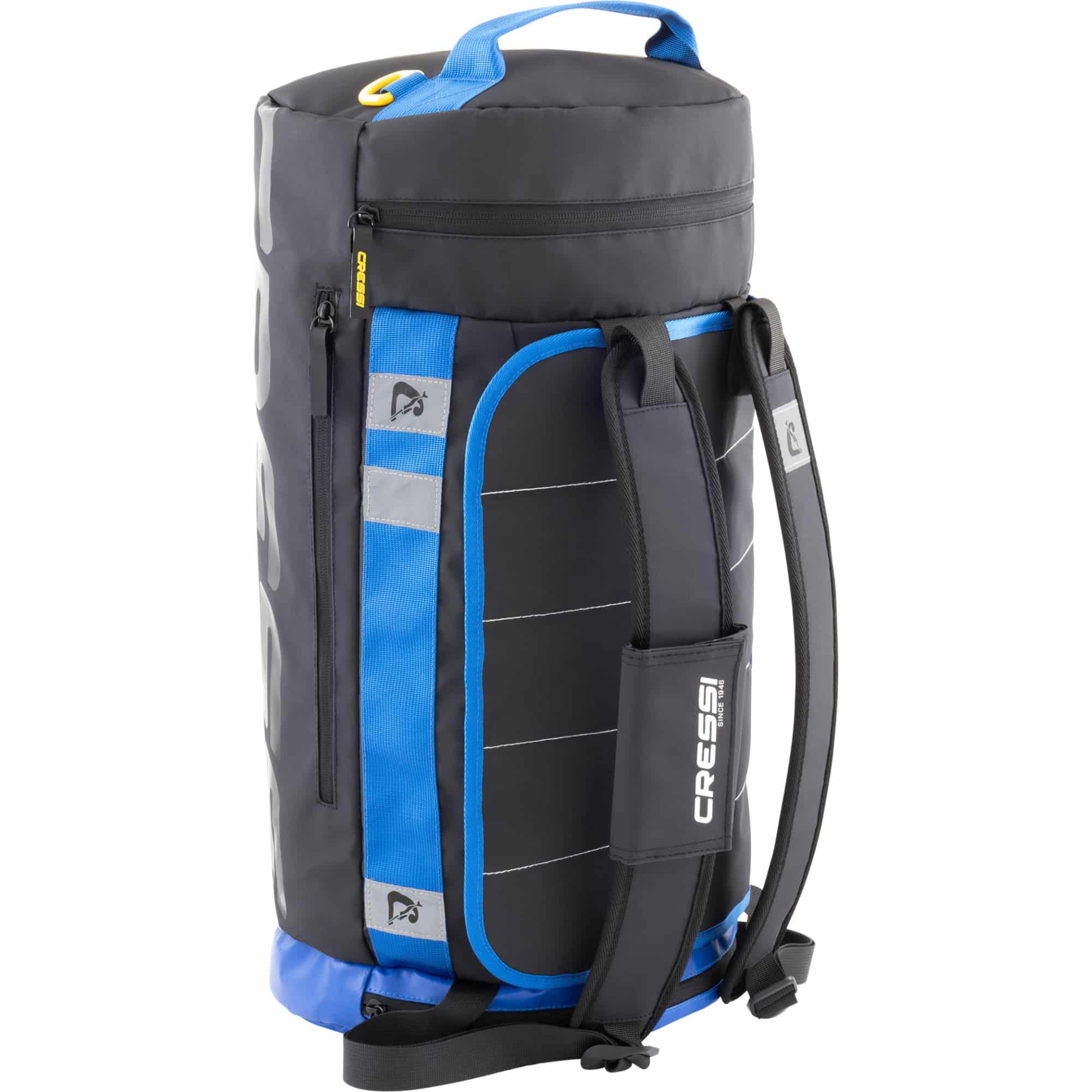 Cressi Walrus (35L) Cressi Walrus (35L) |
$74.95 | A do-it-all carry that converts between backpack and duffel for shorter trips and day use |
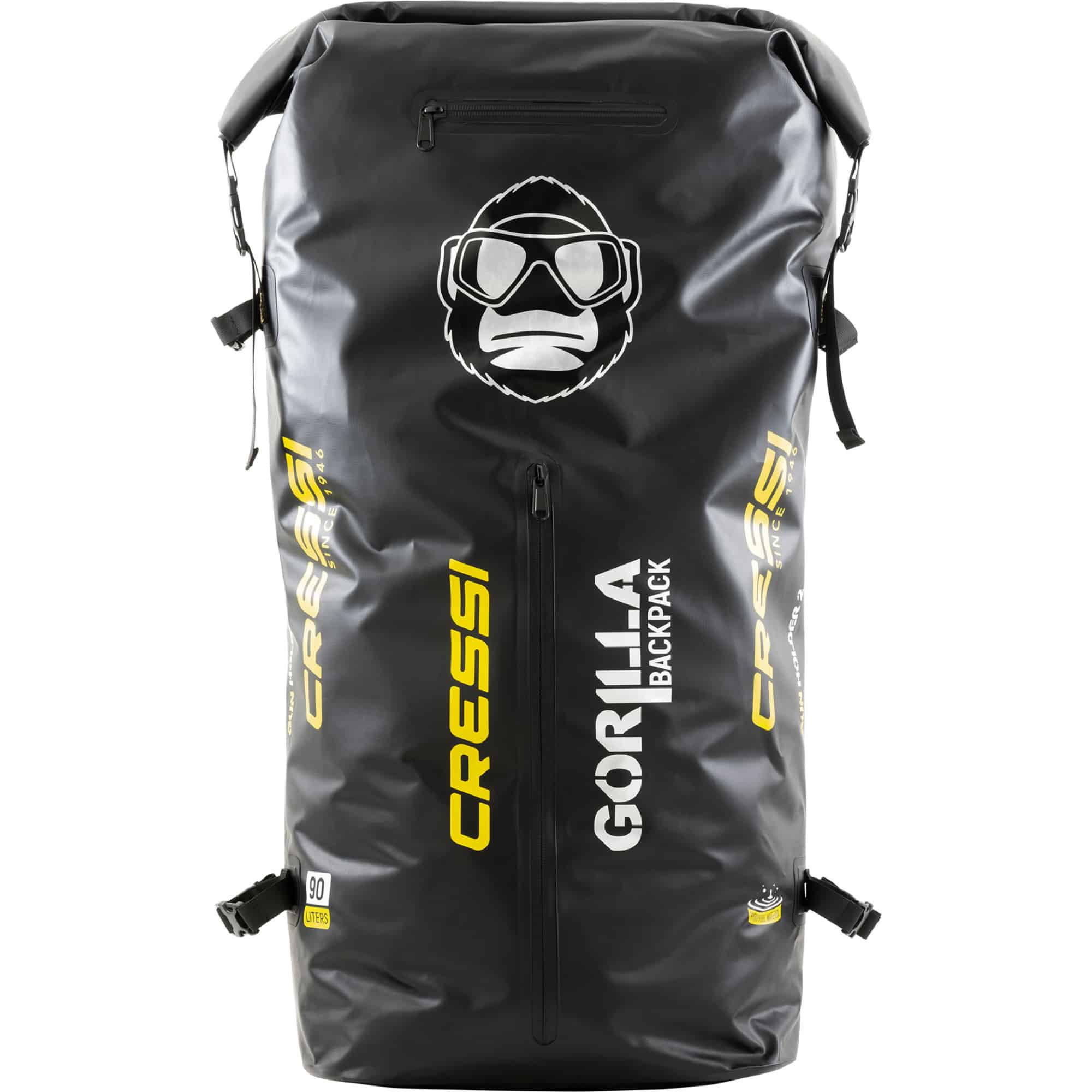 Cressi Gorilla Backpack (80L) Cressi Gorilla Backpack (80L) |
$149.95 | Hauling a complete scuba kit: high-capacity, waterproof, and worn as a backpack |
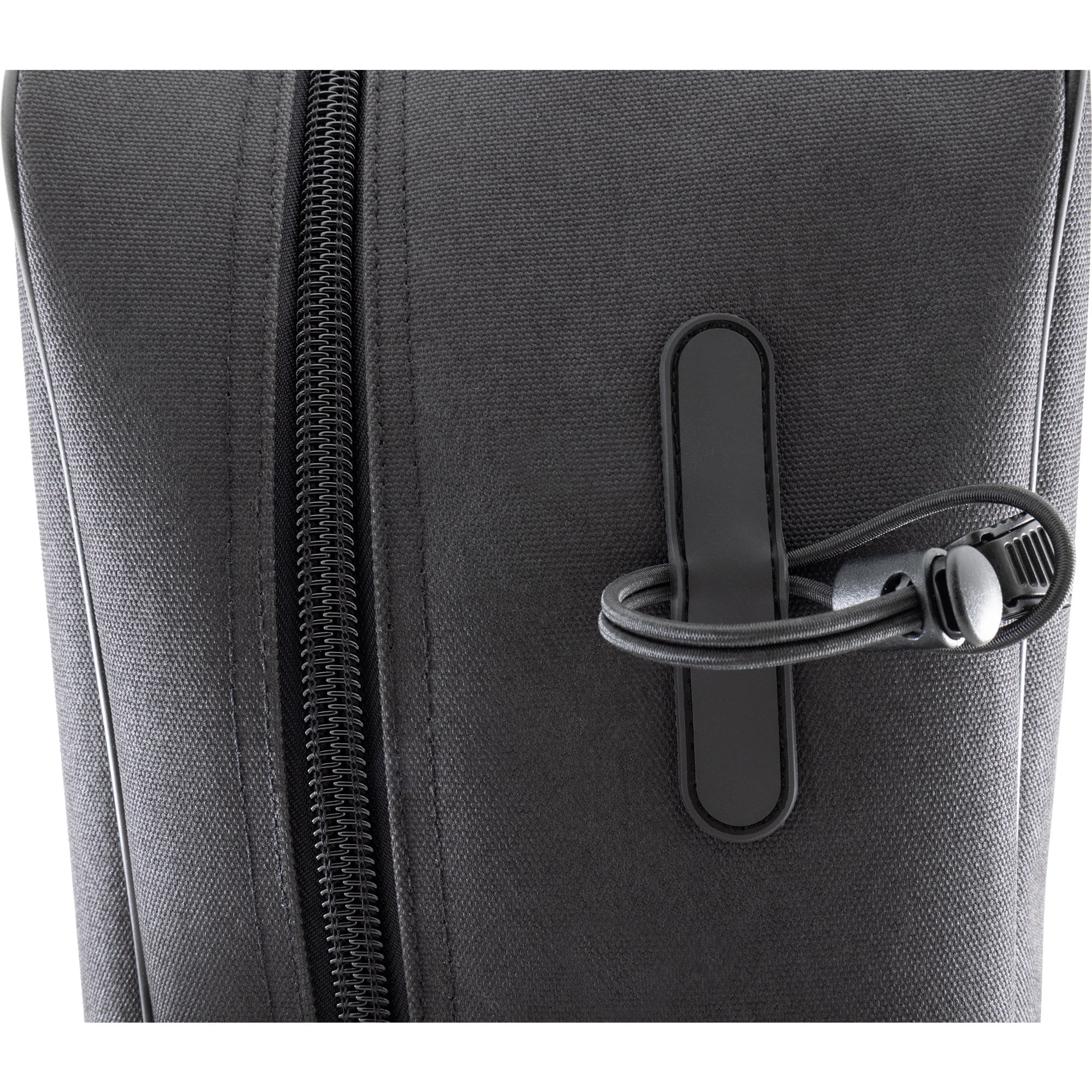 Cressi Helios Cressi Helios |
$59.95 | Freedivers and spearos who want a hands-free backpack with long-fin room and speargun straps |
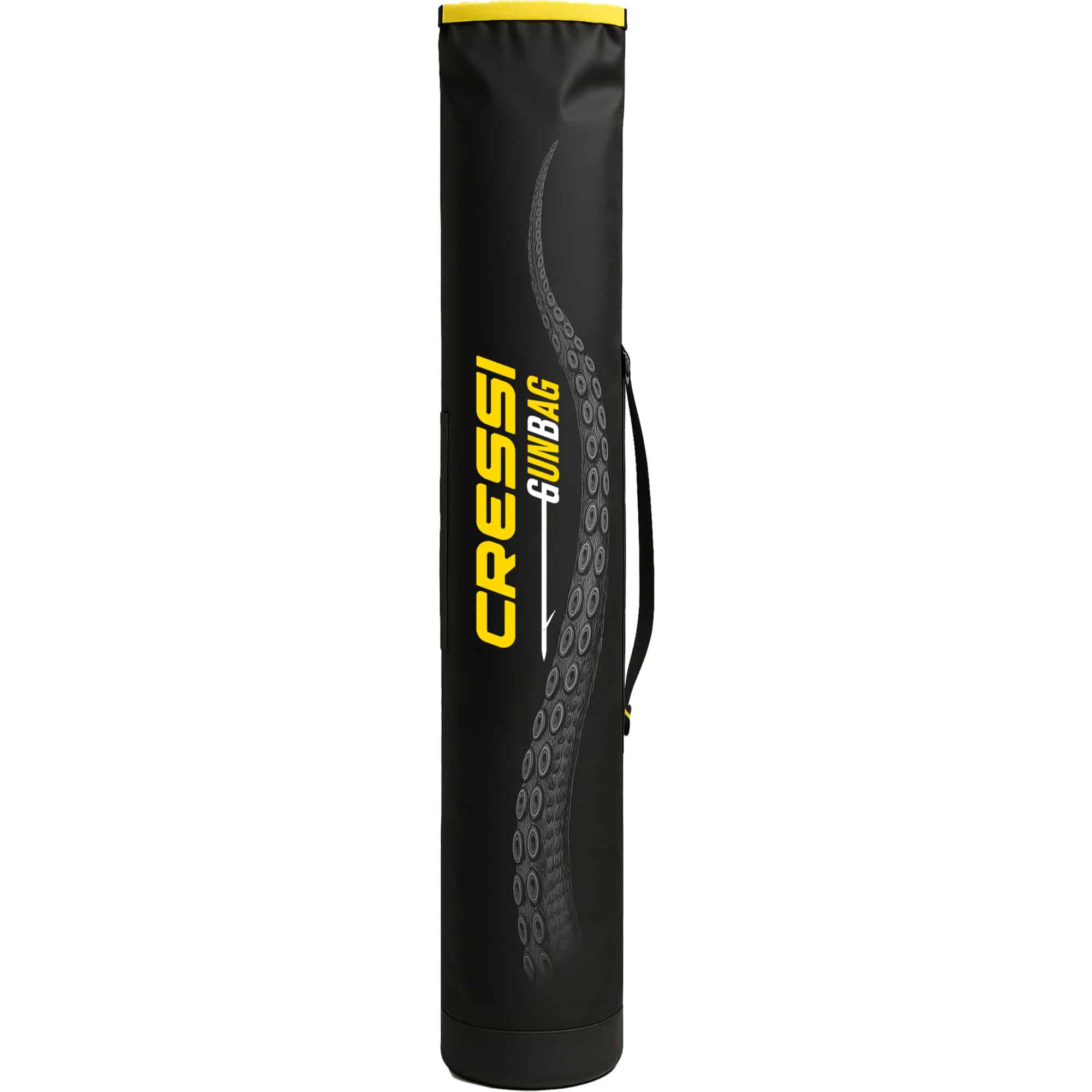 Cressi Maverick Cressi Maverick |
$119.95 | Spearfishers transporting spearguns and shafts in a waterproof dry bag |
Prices and online availability can change, and our in store inventory is often different from what’s online, so call ahead if you have your heart set on a specific bag.
What Actually Needs to Fit?
Capacity is tricky because bag descriptions don’t always match how divers think. You’re not packing abstract volume. You’re packing long fins, curved masks, soft exposure gear, towels, clips, defog, sunscreen, and maybe larger scuba components.
For a light snorkel or reef day, your bag may only need to handle fins, mask, snorkel, towel, water bottle, and a small dry pouch. For a certified diver bringing more personal gear, the load changes fast. A BCD adds bulk. Regulators deserve more thoughtful placement. A wetsuit or skin is soft, but it still takes room once wet and rolled up in a hurry. That’s where the numbers help: a 35L Walrus suits a light day kit, while a full scuba setup is happier in the 45L Olimpia or the 80L Gorilla.
Before buying any Cressi dive bag, lay out what you actually bring on a typical day. Then add the items you always forget until the last minute: reef-safe sun protection, dry clothes, sunglasses, certification card, and a small save-a-dive kit if you carry one.
A bag that barely closes in your living room won’t be more fun on the dock. Leave yourself room to pack imperfectly, because after a dive, nobody folds a wetsuit like they’re packing for a catalog photo.
Construction Details Worth Checking in Person
Specs matter, but only when you connect them to real use. A product page lists pockets, fabric, handles, zippers, and dimensions. Helpful, sure. The better question is how those details feel when the bag’s loaded with your actual dive day in mind. A few things worth getting your hands on before you buy.
Opening shape and access
A wide opening can mean the difference between smoothly loading fins and bending, shoving, and reorganizing every time you need something. For boat use, easy access isn’t a luxury. It keeps your gear tidy and helps you avoid digging through the bag while everyone else is getting ready. This is where a full-panel duffel like the Olimpia or a full-length zip like the Maverick’s really shows its value.
Handles, straps, and carry comfort
Carry comfort is easy to ignore until you’re walking from the car to the marina with a full load. Check whether the handles feel comfortable in your hand, whether shoulder straps sit well, and whether the bag becomes awkward when it’s packed unevenly. A convertible carry like the Walrus lets you switch to a backpack when the walk gets long.
Fabric, reinforcement, and zippers
A waterproof tarpaulin shell keeps salt water where it belongs, but a good dive gear bag is more than its fabric. Look at the stress points: corners, zipper ends, handle attachments, and seams. Zippers should be easy to operate and not feel like they’re fighting the bag’s shape. This is where shopping in person helps. You can feel the fabric, test the opening, compare how flexible each option is, and picture whether it belongs on the boat or in your travel stack.
Common Buying Mistakes to Avoid
- Assuming one bag should do everything. One bag can work if your travel and boat-day needs are simple. If you fly with gear and dive from boats, a two-bag setup is usually cleaner.
- Buying by size alone. Bigger can help, but a huge floppy bag is annoying to carry and easy to overpack.
- Forgetting wet/dry separation. A wet bag either drains or seals — either way, plan for it before you’re standing on the dock with a wet towel and a phone in the same compartment.
- Ignoring fin length and opening shape. A bag can have enough theoretical room and still be awkward if long fins are hard to load.
- Choosing a travel bag for a boat problem. A structured scuba diving travel bag can be excellent on the road and clunky on deck.
- Choosing a light day bag for a protection problem. A breathable or packable bag is handy, but it isn’t always the right answer for delicate gear in transit.
Quick Answers Before You Buy
Is a mesh dive bag enough for scuba gear?
A mesh bag drains and airs out wet gear, which is handy, but it protects nothing and lets salt water drip onto whatever’s nearby. For light warm-water snorkel gear it can be plenty. For a fuller scuba kit, most divers are better served by a waterproof bag like the Gavone that contains the mess, or a structured travel bag that keeps fins, BCD, exposure gear, and accessories organized.
Which Cressi bag is best for a Florida Keys boat day?
The Gavone is our go-to. It’s a waterproof roll-top that seals wet gear completely, hoses off fast, and holds its shape while you load it — so a dripping wetsuit never soaks the rest of your kit on deck or in the car.
Should I bring both a travel bag and a boat bag?
If you’re traveling to the Keys with gear and then diving from boats, yes. That setup often makes sense. The travel bag gets your gear here; the wet bag makes the boat day easier. A lot of divers pack the smaller bag inside the larger one for the trip down.
What should I check before buying a Cressi bag?
Check the opening, carry comfort, pocket layout, fabric feel, zipper movement, and whether your longest or bulkiest gear fits naturally. If you can, bring or visualize your actual kit instead of guessing or stop by the shop and load it before you buy.