
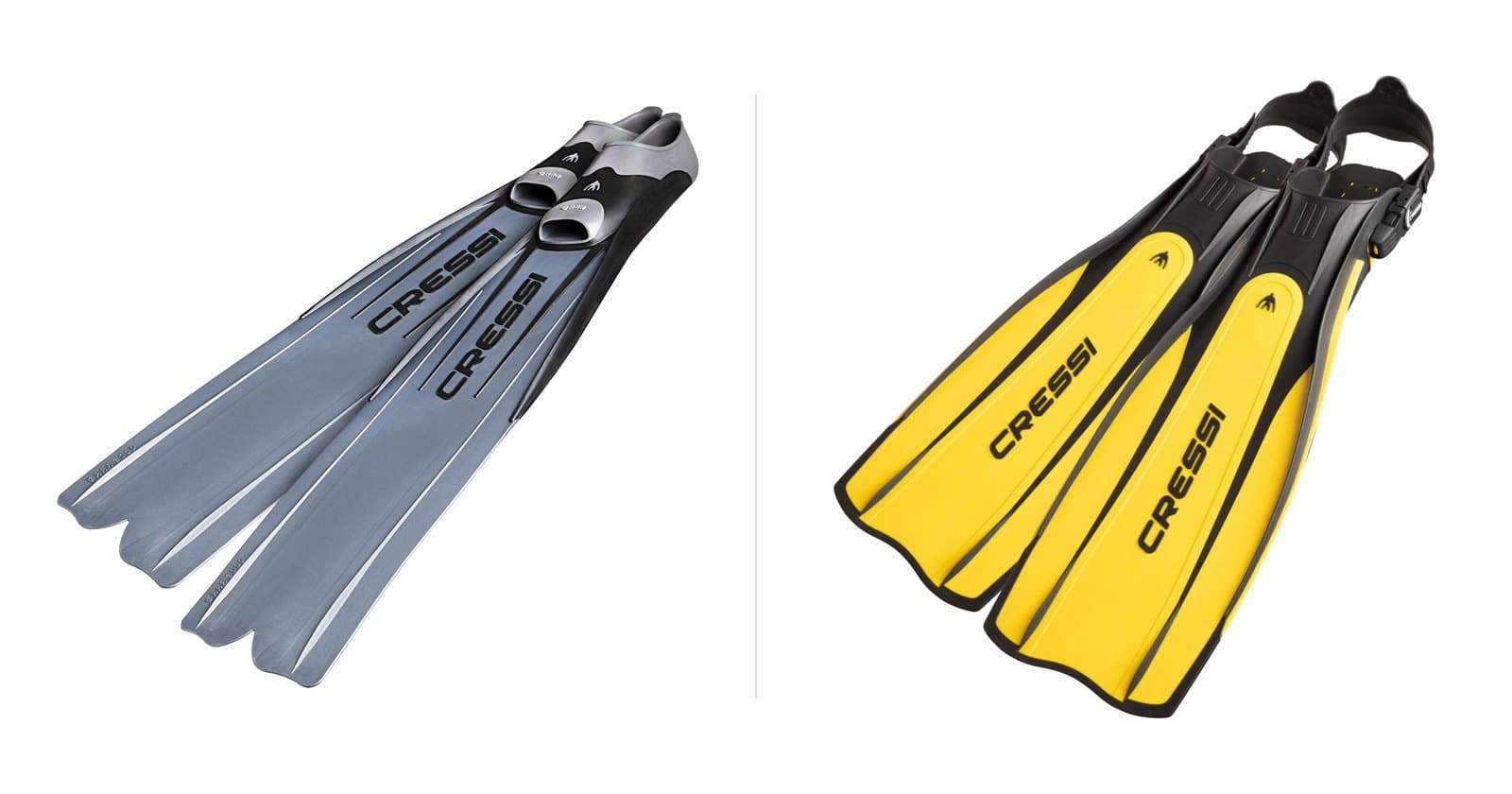
You’re standing in front of a fin wall, staring at a long-blade pair that looks fast, powerful, and way more “serious” than the shorter fins beside it, and now you’re stuck on the real buying question – freediving fins vs scuba fins, which one actually fits the way you dive? If you’re planning breath-hold dives or spearfishing, long blades are built for that slow, efficient kick. If your trips look more like reef snorkeling, boat ladders, and standard recreational scuba, they can feel like too much fin for the job.
That’s where a lot of shoppers get tripped up, especially once Cressi models, foot pockets, boots, and sizing systems enter the picture. At Captain Hook’s, we’d rather help you match the fin to the water time you’ll actually have than sell you a blade that spends more time in the closet than in the Keys. This guide will show you when long blades make sense, when they do not, and which Cressi fins land on each side so you can buy with confidence.
The Short Answer: Match the Fin to the Dive
Long-blade fins are the right call for freediving and spearfishing. Shorter scuba fins are the better call for standard recreational scuba, reef snorkeling, boat dives, and travel days where you want easier handling. If you are not doing breath-hold descents or hunting on a breath, you probably do not need full long blades.
| Feature | Freediving fins | Scuba fins |
|---|---|---|
| Blade feel | Longer, often more flexible | Shorter, often more compact and supportive |
| Kick style | Slow, efficient kicks | Controlled kicks with dive gear |
| Best use | Freediving, spearfishing, breath-hold training | Recreational scuba, boat dives, reef dives |
| Maneuverability | Less handy in tight spaces | Easier around reefs, ladders, and other divers |
| Travel ease | More awkward to pack | Easier for most vacation bags |
| Boot setup | Depends on full-foot or open-heel model | Often open-heel with dive boots, though full-foot options exist |
If your real plan is a Keys vacation with snorkeling, a reef dive, and maybe a boat day, shorter recreational fins will usually feel easier from start to finish.
What Makes Long Blade Fins Different?
Long freediving fins are designed to move more water with each kick. Instead of a fast flutter, you use a slower cadence and let the blade load and release. That rhythm fits breath-hold diving because every movement uses energy and oxygen. A long blade helps you descend, glide, and return with fewer kicks than you would usually take in a short recreational fin.
That same design can feel like overkill when you are not freediving. On scuba, you have a tank, BCD, weights, hoses, gauges, and often a buddy close by. You’re not usually trying to cover vertical distance on one breath. You are making small trim changes, holding position, turning around coral heads, and moving calmly with the group. A shorter scuba fin gives you more control in those moments.
Materials and stiffness also play a role, but start with the use case before you worry about blade construction. If you haven’t decided that you truly need freediving fins, carbon, composite, or advanced blade material should not drive the purchase.
For casual surface snorkeling, a shorter fin such as the Cressi Agua is often a friendlier choice than a full freediving blade. For recreational scuba diving, look at fins built for tank diving rather than trying to force a breath-hold fin into the job.
Can One Pair Cover Both?
Sometimes, yes. Perfectly, no. If you mostly snorkel and occasionally duck dive, a shorter recreational fin can be enough. If you mostly scuba dive and want one pair for boat trips, reef sites, and travel, scuba fins are the safer starting point. If you are training for freediving or spearfishing regularly, buy a freediving fin and accept that it will not be the easiest fin for every other water day.
The middle ground in the Cressi lineup is the Cressi Free Frog. It is shorter than a full long-blade freediving fin, so it feels less extreme for someone who wants more reach without committing to a full Gara-style blade. Think of it as a compromise for the diver who is not living at either end of the spectrum.
For travel, shorter fins usually win. Full long blades take more luggage space and need more care when packed. If you fly often, dive casually, or bring one gear bag for several activities, that packing reality should be part of the decision.
What’s the Best Cressi Fin for Each Situation?
Cressi makes strong options on both sides, so the cleaner way to shop is by category first and model second. You can browse the full Cressi fins collection, but this map will get you pointed in the right direction.
| Use case | Cressi models to consider | Best fit for |
|---|---|---|
| Freediving and spearfishing | Cressi Gara 3000 LD, Gara 2000 HF, Gara Modular Impulse, Gara Modular Sprint, Gara Professional LD, Origin LD, Origin HD | Divers using slow, efficient kicks on breath-hold dives |
| Recreational scuba | Cressi Pro Light, Frog, Frog Plus, Reaction EBS, Thor EBS | Divers carrying scuba gear who want control, power, and easier handling |
| Crossover use | Cressi Free Frog | Someone who wants a shorter middle-ground fin before going full long blade |
If you want a deeper product-by-product look, Captain Hook’s also has our full Cressi fins guide. If you are building out the rest of your kit, pair the fin decision with the right mask and snorkel setup, such as our guides to the best Cressi dive masks and best Cressi snorkel sets.
Sizing, Foot Pockets, and Dive Boots
This is where Cressi can surprise people. The sizing system is not the same across every fin in the freedive family. Gara fins are full-foot and size in EU numbers. Origin fins are open-heel and size by letter. Same sport, opposite systems.
| Fin style | Typical sizing style | Boots? | What to watch |
|---|---|---|---|
| Gara freediving fins | EU numbered sizes | Usually barefoot or with a thin sock, depending on fit and use | Full-foot fit should feel secure without painful pressure |
| Origin freediving fins | Letter sizes | Generally used with dive boots | Boot thickness affects the final fit |
| Open-heel scuba fins | Often letter sizes | Usually yes | Try or size with the boot you will actually wear |
| Full-foot recreational fins | Often shoe-style or EU sizing | Usually no | Better for warm-water, barefoot use |
If you are looking at a Cressi fins size chart, check the exact model before choosing. Do not assume your Gara size transfers cleanly to an Origin, or that an open-heel scuba fin will fit the same as a full-foot fin. You can also shop by pocket style: full-foot fins for simpler warm-water use or open-heel fins if you want boots and an adjustable strap.
| Product | Price | Sizes | Best for |
|---|---|---|---|
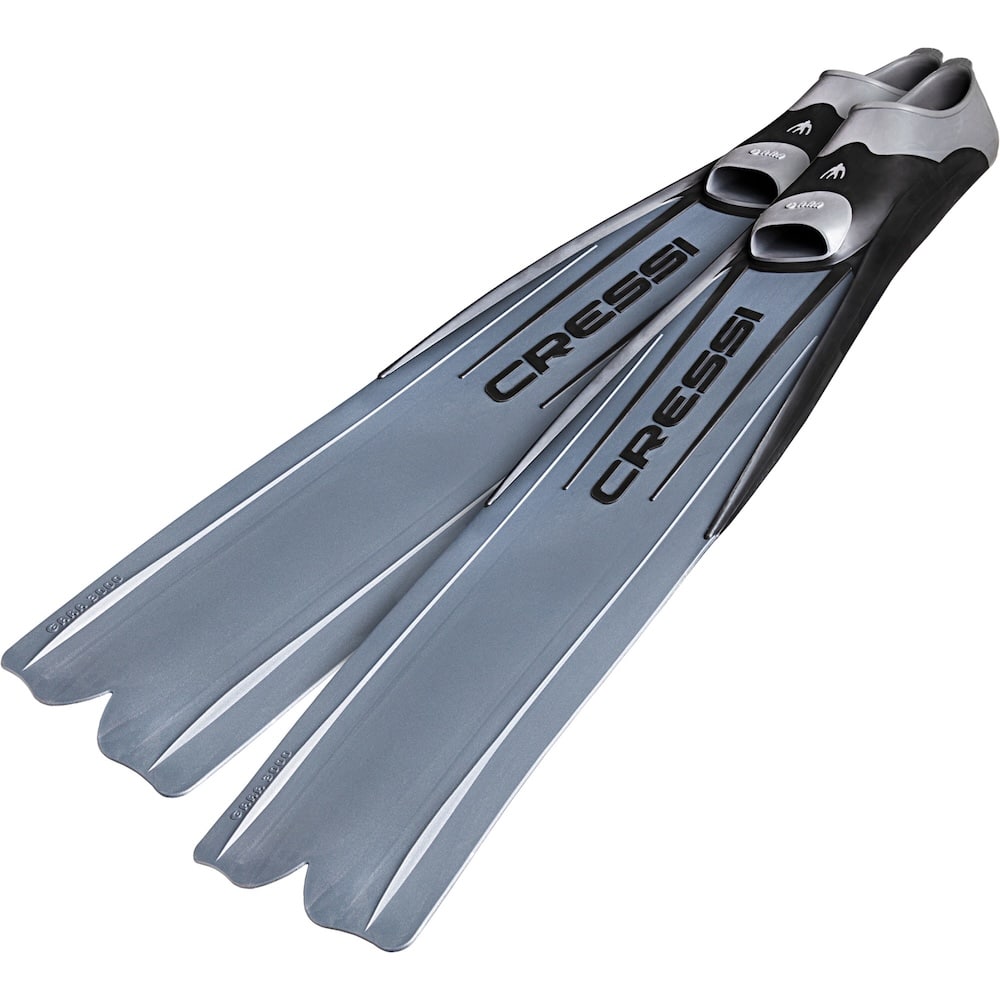 Cressi Gara 3000 LD Cressi Gara 3000 LD |
$129.95 | 40/41, 42/43, 44/45, 46/47 | Softer long-blade feel, the usual first Gara |
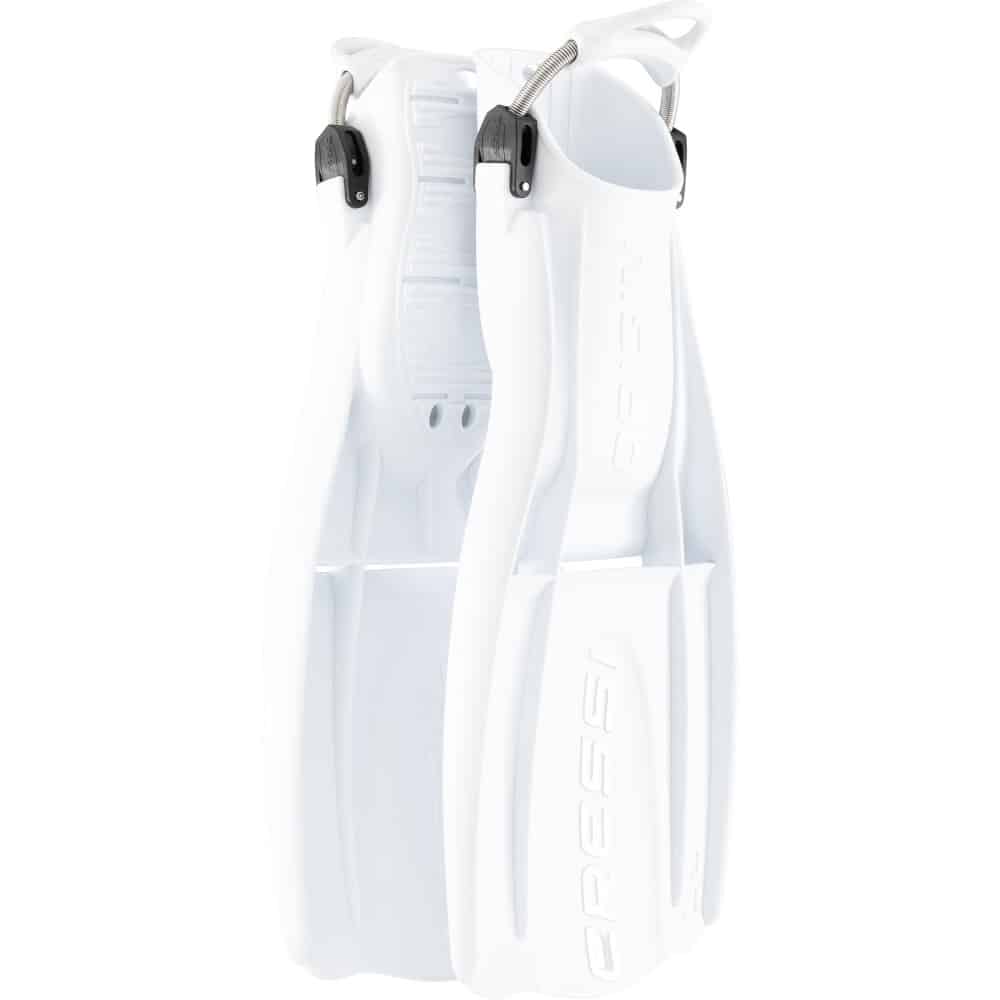 Cressi Origin LD Cressi Origin LD |
$189.95 | S/M, M/L, L/XL | Origin family, softer direction. Open-heel, so it sizes by letter |
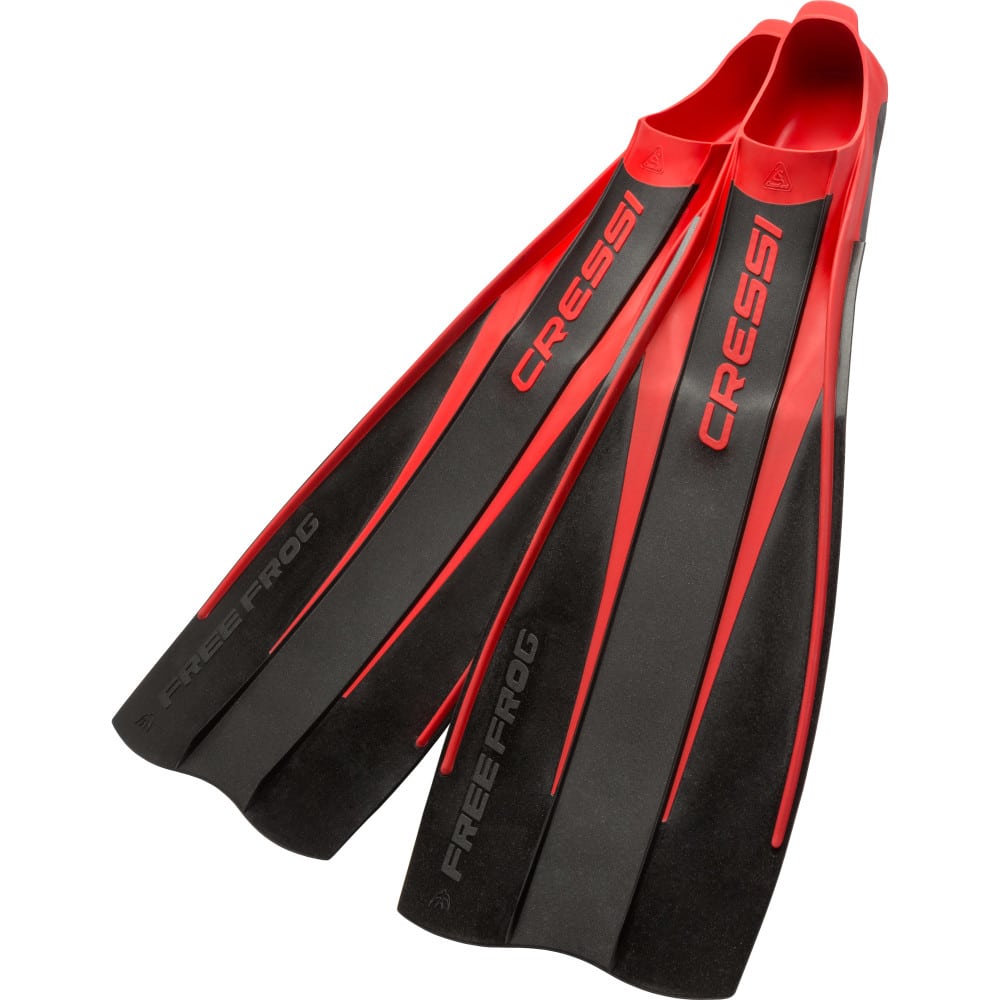 Cressi Free Frog Cressi Free Frog |
$59.95 to $64.95 | 37/38, 39/40, 41/42, 43/44, 45/46 | Shorter crossover when a full long blade is more than you want |
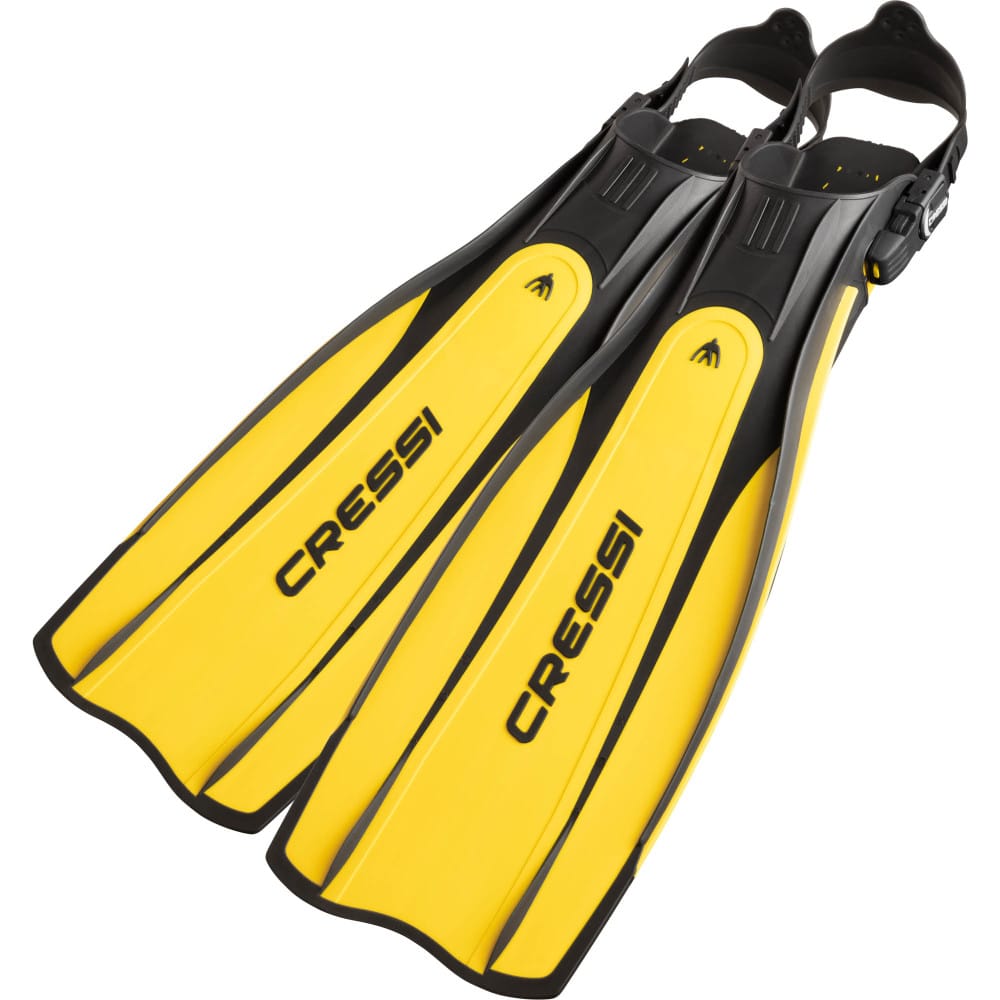 Cressi Pro Light Cressi Pro Light |
$89.95 | XS, S/M, M/L, L/XL, XL, 2XL | First stop for most warm-water divers, widest letter size run |
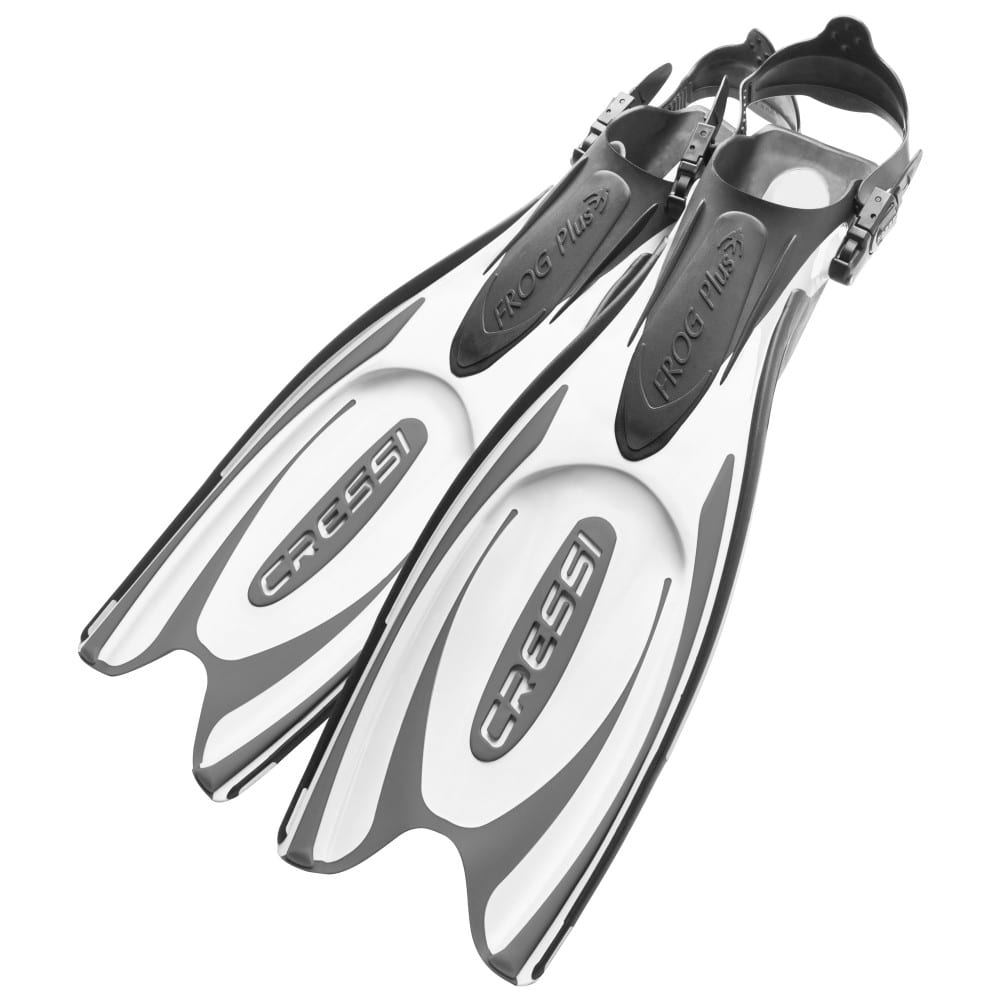 Cressi Frog Plus Cressi Frog Plus |
$109.95 to $119.95 | XS/S, S/M, M/L, L/XL | Proven Frog platform with a more modern feel |
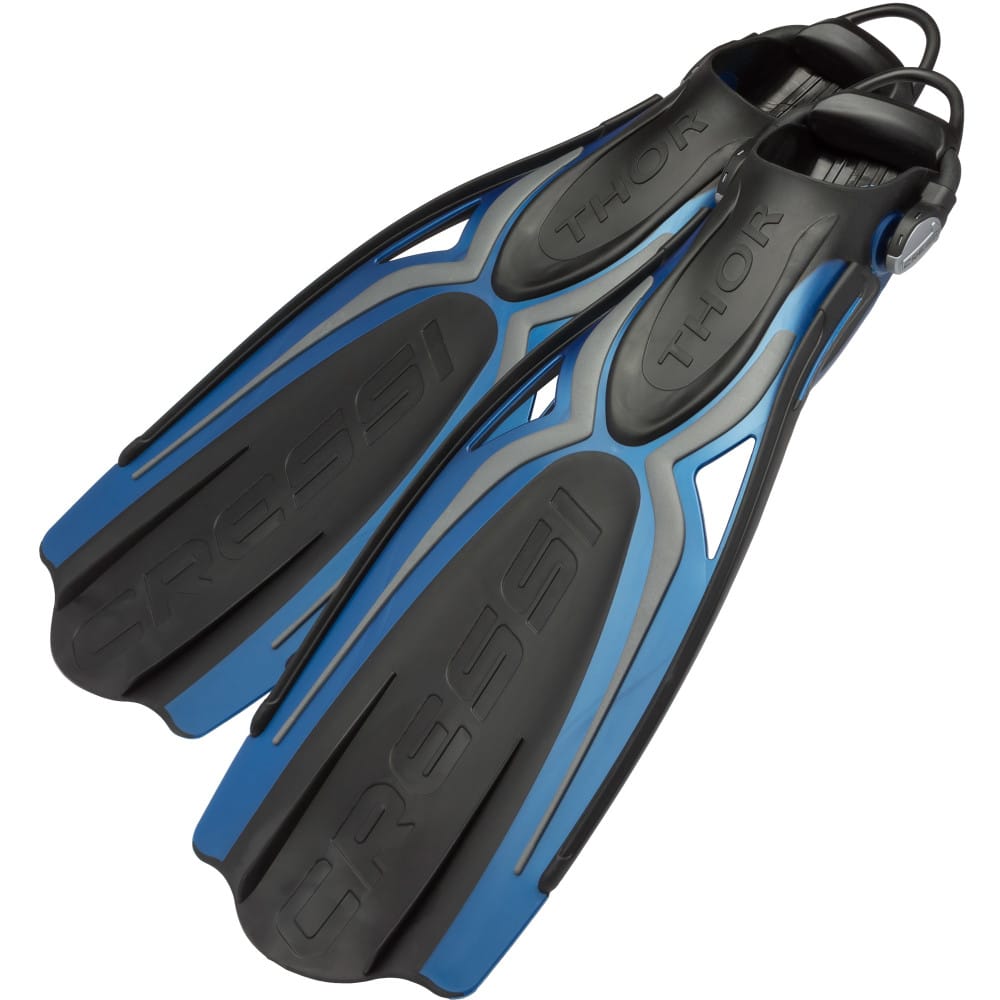 Cressi Thor EBS Cressi Thor EBS |
$149.95 to $159.95 | XS/S, S/M, L, XL | More power, for divers comfortable with a larger fin |
Related Cressi Fin Comparisons
Frequently Asked Questions
Which fins for snorkeling are easier to travel with?
Shorter snorkeling fins are usually easier to pack, carry, and wear on a vacation day. They take up less room in a suitcase and feel less awkward if you are walking from the beach to the water, climbing a ladder, or mixing snorkeling with other activities. Long freediving fins can travel fine if that is the gear you already own, but they are not the most convenient choice for a casual trip.
Which fins for scuba should I buy if I only dive a few times a year?
If you only dive occasionally, look for scuba fins that are comfortable, easy to don, and simple to use with the gear you already have. You do not need a freediving blade just because it looks more advanced. For most occasional divers, a shorter scuba fin is easier to live with on the boat, on the ladder, and in the water.
Can I use freediving fins for scuba diving?
Yes, you can use them, but that does not make them the best choice for every scuba dive. A freediving fin may feel long and less manageable when you are moving around a reef, boarding a boat, or making small position changes with tank gear. If scuba is your main activity, a fin built for scuba will usually feel more natural.
How do I read a Cressi fins size chart?
Start by checking whether the fin is full-foot or open-heel, because that changes how the size chart works. Gara models use EU numbered sizing, while Origin models use letter sizing, so you should not assume one size system transfers to the other. Match the chart to the exact model, then factor in whether you will wear boots or go barefoot.
Do I need dive boots with Cressi fins?
Usually yes with open-heel fins, because the strap design is meant to work with a boot. Full-foot fins are usually worn barefoot or with a thin sock, depending on fit and water temperature. If you plan to wear boots, size with the boots you will actually use so the foot pocket does not end up too tight.
Are Cressi fins good for both snorkeling and scuba?
Some Cressi fins can cross over, but the better question is whether the same fin will feel right for both activities. A shorter recreational fin is often the easier middle ground if you split your time between snorkeling and scuba. If you want one setup for both, fit and comfort matter more than choosing the longest blade possible.