
Key Takeaways
- Spur-and-groove reef. Looe Key runs in coral ridges with sandy channels between them, which stacks fish and larger animals at different depths from about 5 to 35 feet.
- Fish come first. Parrotfish, angelfish, sergeant majors, blue tangs, grunts, and snapper are the everyday sightings, and most are close enough to enjoy from the surface.
- Nurse sharks are the calm regulars. The shark you’re most likely to see rests quietly on the bottom, so give it space and skip the drama that other shark spots trade on.
- Snorkeling and diving show different reefs. Snorkelers get the sunlit coral tops while divers reach the deeper ledges and grooves where bigger animals rest.
- Conditions decide the day. Summer often brings the clearest water, but wind and sea state still set visibility, so check before you book and consider calmer Newfound Harbor Key for young kids.
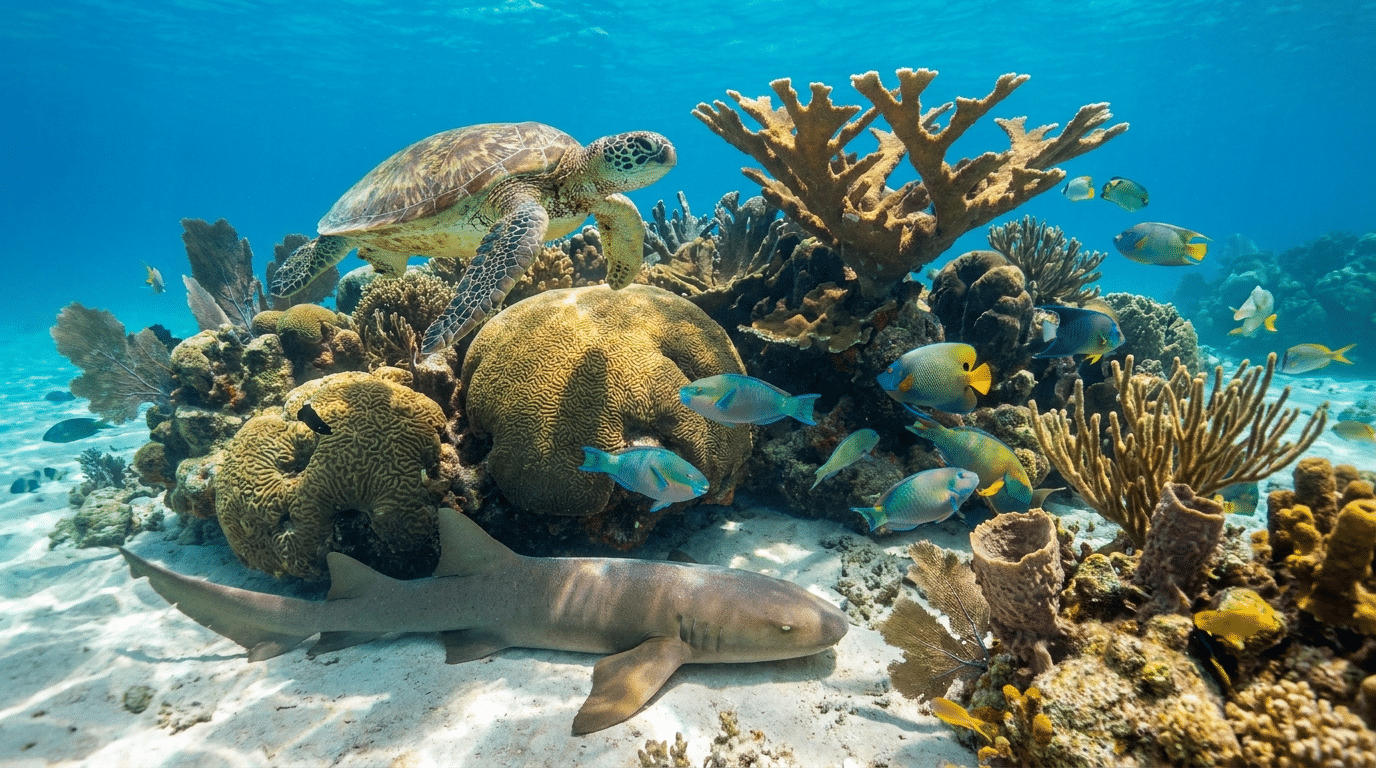
So you’ve got a snorkel trip on the calendar. The boat ride out is half the fun, and then the real question hits. When you slip into the water at Looe Key coral reef, what are you actually going to see? Not the postcard version. The real one. Looe Key is a living spur-and-groove reef off Big Pine Key, and between the shallow coral ridges, sandy channels, and clear blue water, there’s a lot going on. Parrotfish grazing. Sergeant majors flashing over the coral. Snapper and grunts bunched into schools. On the right day, a nurse shark tucked under a ledge or a sea turtle cruising through. It’s busy in the best way, and there’s usually something new to notice every time you look down. Here’s a look at the coral, the fish, and the bigger animals you’re most likely to spot, what changes if you’re snorkeling versus diving, and how to set your expectations before you go.
How Does the Reef Layout Shape What You See?
A spur-and-groove reef means the bottom isn’t one flat coral garden. Picture long coral ridges running roughly parallel, with sandy channels in between. The ridges are the “spurs” and the sand lanes are the “grooves.”
That layout stacks life at different levels. Fish cruise over the coral tops, tuck into holes, feed along the edges, and run through the grooves like underwater streets. Bigger animals tend to use the ledges and sandy breaks to rest or pass through. Depths run about 5 to 35 feet, so snorkelers get a bright view from the surface and divers get room to work the deeper structure.
The Coral: Ridges, Fans, Heads, and Thickets
The coral itself is a big part of why the reef feels so alive. You might see branching elkhorn and staghorn, rounded brain coral heads, star coral, and sea fans swaying in the current. Soft corals add movement too, especially when the water’s clear and the light is shifting across the bottom.
Elkhorn and staghorn are threatened species, so it’s worth remembering this reef is fragile as well as beautiful. Sanctuary protection gives the coral a better shot, and a few simple habits help: wear reef-safe sun protection, keep your fins off the bottom, and never touch or stand on coral.
Want to know more about local reef care? Captain Hook’s does its own coral stewardship work: read about our coral program.
The Fish You’ll Probably Notice First
Ask what to see at Looe Key and the honest answer starts with fish. The everyday reef fish here are colorful, active, and often close enough to enjoy from the surface.
- Parrotfish graze along the reef, flashing green, blue, and pink as they scrape at coral and rock.
- Queen and French angelfish bring bold color and slow, easy movement around the coral heads.
- Sergeant majors hover in loose groups, easy to pick out by their striped bodies.
- Blue tangs move over the reef in quick bright bursts, sometimes in loose schools.
- Grunts, yellowtail snapper, and mangrove snapper often gather in schools around structure.
- Hogfish, wrasse, damselfish, and Atlantic spadefish fill in once your eyes settle.
The first few minutes underwater can feel like sensory overload, in a good way. Slow down and watch one coral head at a time, and smaller patterns start showing up. Fish feeding, defending a patch, pairing off, or darting into cover.
The Bigger Animals You Might See
What’s around changes day to day, so nobody honest is going to promise you every big animal on every trip. Still, the reef has a solid cast of larger creatures that turn up.
Nurse sharks are one of the more memorable ones, usually resting quietly under a ledge or near the bottom. Barracuda hang in the blue, holding still until they decide to move. Green moray eels peer out of coral openings. Southern stingrays glide across the sand channels. And sea turtles cruise through now and then, with that slow, ancient-looking calm that makes everyone stop and stare.
On the right day, divers might spot a goliath grouper or the occasional reef shark. Treat those as bonuses, not scheduled stops. The reef is wild, and that’s part of the appeal.
Are There Sharks at Looe Key?
Yes, there are sharks at Looe Key, but the question deserves a calm answer. The one you’re most likely to see is a nurse shark, and nurse sharks are generally docile, usually resting on or near the bottom. Enjoy them the way you’d enjoy any reef wildlife. Look, give space, and don’t touch or chase.
| Shark type | How likely is it? | How you may see it | How to behave |
|---|---|---|---|
| Nurse shark | More likely | Resting under ledges or near the bottom | Observe calmly and keep distance |
| Reef shark | Possible, not the norm | Cruising past in open water | Stay calm, do not pursue |
Spotting a shark can be a highlight of the trip, especially once you know what you’re looking at. The point isn’t to get close. It’s to let the animal do its thing while you watch.
Snorkeling vs Diving at Looe Key Reef: Two Views of the Same Reef
Looe Key works for both snorkelers and scuba divers, mostly because there’s life at every depth. Which one suits you comes down to the kind of view you’re after.
| Experience | What you’ll see well | Best fit |
|---|---|---|
| Snorkeling | Shallow coral tops, bright reef fish, schools moving over the reef | Families, first-timers, casual ocean lovers, and anyone who wants an easy surface view |
| Scuba diving | Deeper grooves, ledges, resting nurse sharks, morays, rays, and larger fish | Certified divers who want more time close to the reef structure |
Snorkelers aren’t getting a watered-down reef. They’re seeing the sunlit top layer, where the color and the fish movement can be fantastic. Divers just get more time in the nooks, ledges, and sand channels where some of the bigger animals rest.
Planning your day? Compare our Looe Key snorkeling trip from Big Pine Key with our Florida Keys scuba diving options.
When is the Best Time to Snorkel or Dive at Looe Key Reef?
Visibility here is usually good, and summer brings some of the clearest, bluest days of the year. Wind and sea state still call the shots, though. When the weather kicks up, the ride out gets bumpier and visibility can drop, especially once the water’s stirred up. A good reef day comes down to matching the site to the weather and to how comfortable your group is in the water. If you’ve got young kids or first-time snorkelers along, nearby Newfound Harbor Key is often shallower and calmer, and it sometimes gets paired with Looe Key depending on the trip and the conditions.
You can also browse our guide to the best snorkeling in the Florida Keys if you’re weighing reef options for the group.
See Looe Key’s Reef Life From Big Pine Key
The best way to get Looe Key is to get in the water and let your eyes adjust. First you catch the big shapes. Coral ridges, sand grooves, schools of fish. Then the small stuff starts popping. An angelfish sliding past a coral head, a parrotfish grazing, a moray tucked into a shadow, a turtle moving through like it owns the place.
If that’s the kind of day you’re hoping for, start with a Big Pine Key departure and let the conditions guide the plan. Check availability for a Looe Key snorkeling trip, or explore snorkeling and diving options with Captain Hook’s when you’re ready to see it for yourself.
Frequently Asked Questions
What fish will you see at Looe Key Reef?
You’ll usually notice parrotfish, angelfish, sergeant majors, blue tangs, grunts, snapper, hogfish, wrasse, damselfish, and spadefish. The mix changes by day, but the reef almost always has plenty of movement once you slow down and watch the coral heads and open sand channels.
Are there sharks at Looe Key, and are they dangerous?
Yes, sharks can show up at Looe Key, and the one you’re most likely to see is a nurse shark. They’re generally calm and often rest on the bottom or under ledges. Give them space, don’t touch them, and let them pass on their own terms.
What kind of coral is at Looe Key?
Looe Key has a mix of branching elkhorn and staghorn coral, rounded brain coral, star coral, and sea fans with soft corals in the current. The reef shape creates lots of hiding places, so the coral feels layered rather than flat.
Can you see sea turtles at Looe Key?
Yes, sea turtles do pass through Looe Key, but sightings vary from trip to trip. When they show up, they usually cruise through slowly and move on, so it pays to keep scanning the water instead of staring at one spot.
Is Looe Key better for snorkeling or scuba diving to see marine life?
Both work well, but they show you different parts of the reef. Snorkelers get the shallow coral tops and plenty of reef fish, while divers can drop into the deeper grooves and ledges where bigger animals are more likely to rest.
What makes Looe Key coral reef different from other reef spots in the Keys?
The spur-and-groove layout gives Looe Key a very layered feel, with coral ridges, sand channels, and a lot of places for fish to feed and shelter. That structure is why the reef feels so active even when you’re just drifting over the top of it.