
Updated: May 2026. Added Marathon & Middle Keys night dive detail, expanded safety section, and new FAQs covering trip times, cost, and beginner readiness.
The ocean feels like another world when you’re night scuba diving. Coral polyps bloom, nocturnal predators prowl (don’t worry), and bioluminescent plankton light up the water like tiny stars. Scuba diving during the day shows you one side of the reef. Night diving reveals something completely different. Many divers hesitate before their first night dive. The darkness can definitely feel intimidating. With the right preparation and mindset, it turns into one of the most magical experiences you’ll ever have underwater.
I was nervous on my first night dive. It’s very different not being able to see. It even feels different than diving on a day with poor visibility. It’s a little “spookier”, but it ended up being one of my favorite dives ever! I’ve only been on a couple of night dives but I have seen some of my favorite ocean life in just those two trips. This guide breaks down everything you need to know about night scuba diving in the Florida Keys: the best dive sites, must-have gear, safety tips, and what to expect from a Marathon, Key Largo, or Key West night dive.
Why the Florida Keys Are Perfect for Night Diving
Diving at night anywhere is an adventure, but the Florida Keys are one of the best locations to do it. Warm water, good visibility and shallow reefs create the perfect conditions for first-timers. Top reasons divers choose the Keys for their first night diving experience:
- Clear Water: Visibility often stays between 20 and 60 feet, even after sunset.
- Shallow Reefs: There are tons of dive sites to choose from, some as shallow as 5-10 feet that still have plenty of life to see.
- Diverse Marine Life: Lobsters, octopuses, rays and much more.
Night dives usually happen at reefs or wrecks you’ve explored during the day. Familiarity helps you relax and knowing the layout reduces the chance of disorientation. It’s also fun to see how different the same location can be at night.
Best Night Dive Sites in the Florida Keys
Not every dive site works well for night diving. Some drop-offs or strong currents make things complicated. These spots stand out because they aren’t too difficult to navigate but have a ton of ocean life to see:
- Molasses Reef (Key Largo): Shallow ledges, abundant marine life, and mild currents.
- Benwood Wreck (Key Largo): A sunken ship that often has a lot of nocturnal fish and coral activity.
- Sombrero Reef (Marathon): One of the best dive sites in the Florida Keys, day or night. Depths around 15-25 feet with awesome finger coral and an abundance of sea creatures.
- Thunderbolt Wreck (Marathon): This is an advanced dive, but it’s one of the most popular wreck dives in the Florida Keys. This wreck has a lot to see!
- Looe Key Reef (Big Pine Key): Great for spotting lobsters and sleeping fish.
Marathon & Middle Keys Night Dives
Marathon sits in the heart of the Florida Keys and gives night divers some of the easiest access to the protected reef tract. From our dock at Captain Hook’s, the run to Sombrero Reef is about 25 minutes. Short enough that you’re on the bow watching the sunset, then back in the water with a torch before full dark.
Coffins Patch is the other Marathon-area site we run after dark. It’s a cluster of finger reefs in 25-30 feet, packed with lobster, spotted morays, and parrotfish tucked into coral heads sleeping. Coffins Patch is especially good for divers who want a calm, shallow first night dive without the boat traffic you sometimes get at Sombrero.
For advanced divers, the Thunderbolt Wreck in 120 feet is one of the most dramatic night dives in Florida. Goliath grouper school on the wreck after dark, and the deck and superstructure feel like a different ship under torchlight. This dive requires Advanced Open Water and good air management not a first night dive.
Key West Night Dives
For Key West night dives, operators commonly choose Sand Key (reef within the Sanctuary Preservation Area) or Joe’s Tug (shallow wreck) when conditions allow. Ask your crew on the day. Each of these sites offers an easy descent, minimal navigation challenges and plenty of ocean life to enjoy. 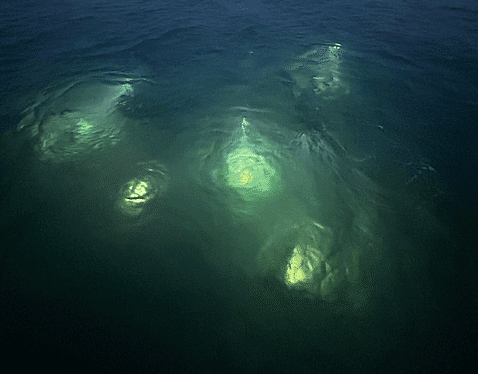
Is Night Diving Dangerous?
Night diving isn’t inherently more dangerous than day diving, but it changes what you’re paying attention to. With proper preparation, the right gear, and a clear head, it’s just as safe as any reef dive and often the most memorable trip you’ll ever do. The risks worth knowing about:
Reduced Visibility & Disorientation
Your torch beam shows you a narrow slice of the reef at a time, and familiar landmarks look different under artificial light. That’s why we always run our first-time night divers on reefs they’ve already dived during the day like Sombrero Reef, Looe Key, Molasses. Familiarity solves most of the disorientation problem before it starts.
Equipment Failure
The single most important rule of night diving: two lights, always. A primary torch with a strong battery, plus a backup you can deploy one-handed if the main fails. We brief light protocols and check both lights before every Captain Hook’s night charter leaves the dock.
Marine Life (Mostly a Misconception)
A lot of first-time night divers worry about sharks or bigger predators being more active after dark. In reality, the nocturnal animals you see on a Keys night dive like octopuses, lobsters, sleeping parrotfish, the occasional nurse shark, are curious rather than aggressive. Move slowly, keep your light off their eyes, and you’ll see behavior you’ll never get during the day.
Nerves & Mindset
The biggest risk on a first night dive is psychological, not physical. Anxiety makes you breathe faster, burn through your air, and make rushed decisions. Slow your breathing on the descent, stay within arm’s reach of your buddy, and remember the dive is no different from a day dive. You’re just using a light instead of sunlight.
How to Prepare for Your First Night Dive
Being prepared ahead of time will help to ease your anxiety. At Capt. Hook’s, we recommend a few tips for new night divers:
- Get Familiar with the Site: Day dives at the same location reduce anxiety. Knowing the reef’s layout makes it easier to navigate in the dark. If you can find out where you’ll be night diving, see if you can do a dive there during the day.
- Choose the Right Operator: Look for shops with strong reviews for night diving. Captain Hook’s has won the award for the best dive shop in the Keys many times (and most recently in 2024). Check out each of their locations:
- Captain Hook’s Dive Center (Marathon)
- Captain Hook’s Big Pine (Big Pine Key)
- Captain Hook’s Dive Key West (Key West)
- Handle the Fear of Darkness: Most first-time night divers worry about jumping into pitch-black water. I felt the same way but once your light hits the reef, the fear fades.
- Check moon phase & wind. Calm nights with less moonlight feel easier for a first night dive and can make any bioluminescence more visible.
PADI Night Diver Specialty
You don’t need a separate certification to do a recreational night dive in the Keys. Open Water is the minimum, but the PADI Night Diver Specialty is one of the most useful add-ons if you plan to night-dive regularly. The course covers light signaling, compass navigation in the dark, buoyancy under reduced reference, and underwater communication when hand signals stop working.
Captain Hook’s runs the Night Diver Specialty out of all three locations. It’s two evening dives plus a brief knowledge review, usually finished in a single trip. See our full certification list.
Must-Have Night Diving Gear
Proper gear ensure you’ll have an enjoyable trip and prevents unnecessary hassles. Here is some of the most important gear to bring on your night scuba dive:
Dive Lights (Primary and Backup)
Your primary light guides the dive. A backup light ensures you won’t get stuck in the dark if the main one fails. Here are some of the best dive lights for night diving:
- OrcaTorch D710 (primary): 3,000-lumen output with four brightness modes and a narrow beam for spotting reef life. Up to 7h 40m runtime on the lowest setting. Top-rated by ScubaLab and still the strongest all-around primary in this price range.
- OrcaTorch D530 (alternative primary): 1,300 lumens with an 8° focused beam. Lighter and easier to handle than the D710 — a good fit if 3,000 lumens feels like more than you need.
- Cressi Lumia Plus (backup): 300 lumens with a 6° tight spotlight, running on four AA batteries (no proprietary charger to fail on a trip). IPX-8 rated to 75 m / 245 ft. Italian-built and exactly what a backup should be.
Never rely on one light. If the primary fails, you need to make sure you’re prepared with a backup. It’s an easy solution that can save your entire trip. Review light etiquette before you splash. Carry two lights and use agreed light signals
Tank Marker Light
A small, battery-powered light or glow stick attaches to your tank valve. This makes you visible to your buddy even from further away.
Dive Computer with Backlight
Reading your depth and dive time is very important, especially at night. Most modern dive computers include a backlight for easy viewing.
Surface Marker Buoy (SMB)
Many divers skip this for daytime dives but it can be a lot more useful at night. Surfacing away from the boat feels scarier in the dark. An SMB can help the crew spot you quickly.
Staying Safe While Night Diving
Night diving doesn’t pose more danger than daytime diving if you stay prepared and pay attention. Here’s some top tips for staying safe while night diving:
- Stay Close to Your Buddy: Maintain visual contact by watching their tank light. If you lose sight of them, stop, shine your light around and wait. Two divers moving makes it hard to find each other.
- Use Light Signals: Hand signals often get lost in the dark. Instead, use light movements. You may need to discuss these ahead of time but here are some examples:
- Slow circular beam = “OK”
- Rapid side-to-side beam = “Attention needed”
- Flashing the light at your chest = “End the dive”
- Move Slowly: Rushing through any dive increases air consumption and raises stress levels. Take it slow. This keeps you calm and improves your chances of seeing some awesome ocean life.
- Monitor Your Air and Depth Keep an eye on your gauge. Divers sometimes forget air checks at night because there’s new experiences to focus on.
- Know What to Do if Your Lights Fail: If your primary light dies, switch to your backup. If both fail, alert your buddy, share their light and ascend together.
- Know the Florida diver-down rules. The divers-down symbol must be 12×12 in when displayed from the water (e.g., float) and 20×24 in from a vessel; divers should remain within 300 ft in open water (100 ft in channels). Your operator will brief boat lighting at night.
What to Expect During the Night Dive
Night diving follows the same process as daytime diving, with a few extra precautions.
Entrance and Descent
Most night dives start with a giant stride from the boat. Turn on your primary light before entering and shine it down. This gives you an immediate sense of the environment. Descend slowly, keeping your light pointed at the reef. Avoid shining directly into other divers’ eyes.
Marine Life Encounters
Behavior shifts at night. Polyps feed, parrotfish sleep, and crustaceans roam around. Move slowly to see more. Expect to see creatures you see a lot less of during the day:
- Octopuses and Squid
- Lobsters and Crabs
- Sleeping Fish
- Eels
- Bioluminescent Plankton
Ascending and Exiting
Start your ascent slowly just like a daytime dive. Complete your safety stop if necessary for your depth. Surface near the boat and signal with your light. Most dive boats shine a bright light into the water near the exit point. This makes it easy to find the ladder. Remember to keep a safe distance back from the ladder as other divers climb up.
Night Scuba Diving FAQs
Is night diving dangerous?
Night diving isn’t inherently more dangerous than day diving, but it does change what you’re paying attention to. The main risks are reduced visibility, disorientation, and equipment failure, and all three are manageable with a primary plus backup torch, a familiar dive site, and a slow descent.
Do I need a dive flag at night in Florida?
Yes. Diving operations must display a divers-down device. Florida requires 12×12 in on the water and 20×24 in on vessels; divers stay within 300 ft in open water (100 ft in channels). At night, vessels engaged in diving use proper navigation lights. Your crew will handle these.
How do you stay oriented underwater?
Night diving can be a little trickier to navigate. Use your dive light, stay close to your buddy and pay attention to your compass.
What marine life appears at night?
Expect to see octopuses, lobsters, crabs, sleeping fish, glowing plankton and more.
Do you need to be certified to dive at night?
Yes. You will need to be Open Water Certified at a minimum. Most certifying agencies like PADI and NAUI also offer night dive specialties. These aren’t required but will help you get more comfortable with night scuba diving.
What time does a night dive trip start in the Florida Keys?
Most Captain Hook’s night charters leave the dock about one hour before sunset, which puts you on the reef in late twilight. We do a quick “sunset dive” or surface interval as the light fades, then drop in for the actual night dive in full dark. Typical return to dock is around two hours after departure. Exact times shift with the season. Call ahead or check the calendar to confirm.
Can beginners do a night dive in the Florida Keys?
Yes but you need to be at least Open Water certified, and most operators (including Captain Hook’s) will want to see a recent dive in your logbook. If it’s been more than a year since your last dive, plan to do a daytime refresher first. We strongly recommend new divers do their first night dive at a shallow, familiar reef like Sombrero or Looe Key rather than a wreck.
How much does a night dive cost in the Florida Keys?
The Captain Hook’s Marathon night dive is $109 and bookable through our online booking system.