
Key Takeaways
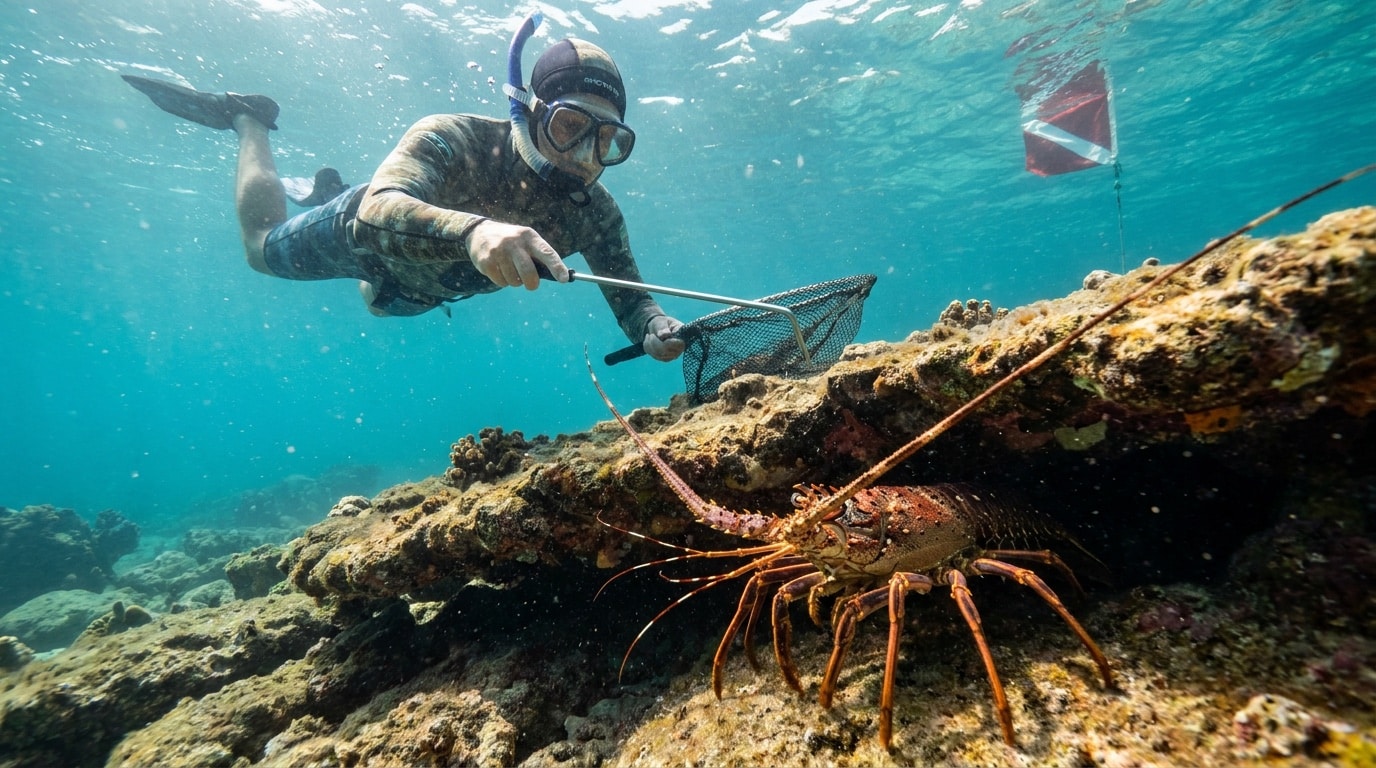
- Spiny, not clawed. The Florida Keys lobster is the clawless Caribbean spiny lobster, caught by hand with a tickle stick and net rather than a trap.
- Snorkeling counts. You don’t need a scuba certification. Most visitors catch lobster free-diving shallow hard-bottom, with scuba as an option for deeper ledges.
- Measure in the water. The carapace must be larger than 3 inches, measured underwater before you keep the lobster, and egg-bearing females always go back.
- Know your zones. Harvest happens on open hard-bottom and patch reef, never in no-take Sanctuary Preservation Areas like Coffins Patch.
- License and flag required. Most harvesters need a Florida saltwater fishing license plus a spiny lobster permit, and a diver-down flag is legally required in the water.
You’re floating over clear Keys water, you spot a pair of long antennae poking out from under a ledge, and the questions hit all at once. Can you grab it? Do you need scuba? Is this even a legal spot to harvest? That’s the moment lobster fishing in the Florida Keys gets real for first-timers. Catching Caribbean spiny lobster here isn’t about wrestling a clawed lobster into a cooler. It’s about finding the right bottom, working a tickle stick and net the right way, measuring the carapace in the water, and staying clear of protected no-take areas.
If you’re visiting Marathon, Big Pine Key, or Key West, you can absolutely catch lobster while snorkeling or free-diving when conditions cooperate, and scuba opens up deeper ledges for certified divers. This guide walks you through the method our crews use on the water, so you know what to look for, what to bring, where lobstering actually happens, and when it’s worth booking a guided trip to let a local crew put you on the right patch of ocean.
Know What You’re Looking For
The Florida Keys lobster is the Caribbean spiny lobster, Panulirus argus. It doesn’t have claws like a Maine lobster. You’re looking for long antennae, a hard spiny shell, and a body tucked back under structure.
Good lobster bottom has plenty of places to hide: ledges, coral heads, holes, hard-bottom cracks, and patch reef edges outside protected zones. From the surface, the first clue usually isn’t the lobster’s body. It’s the antennae waving out of a shadow. Slow down the second you see them. A rushed dive just sends the lobster deeper into the hole before your net is anywhere near ready.
Snorkeling vs Scuba for Lobster
You don’t need a scuba certification to learn how to catch lobster in the Florida Keys. Snorkeling and free-diving are common recreational methods, especially in shallower areas with good visibility. Scuba lets certified divers work deeper ledges, but it also adds gear, air management, and more to think about at once.
| Method | Best Fit | Tradeoff |
|---|---|---|
| Snorkeling/free-diving | First-timers, confident swimmers, shallower hard-bottom | You need breath-hold comfort and calm, workable conditions |
| Scuba | Certified divers, deeper ledges, longer bottom time | You’re managing dive safety while handling lobster gear |
If you’re deciding between snorkeling trips in the Florida Keys and scuba diving trips, start with your comfort in the water. Snorkeling for lobster is often the cleaner starting point when the water is calm and the bottom is shallow enough for repeated dives. Lobster diving in the Florida Keys makes more sense once you’re certified and comfortable working slowly underwater.
The Gear You’ll Use in the Water
A basic recreational lobster setup is a mask, snorkel, fins, gloves, tickle stick, lobster net, lobster gauge, mesh catch bag, and diver-down flag. The tickle stick is a slim rod you use to coax the lobster out of its hole. The net goes behind or around the lobster’s exit path so it backs into the opening instead of shooting off.
Gloves protect your hands from sharp edges and that spiny shell, but they’re not a license to reach blindly into holes. The gauge measures the lobster’s carapace before you decide to keep it. The dive flag tells boaters people are in the water. If you’re putting your own kit together, Captain Hook’s beginner gear guide and snorkel and dive gear shop are good places to start.
The Tickle-and-Net Method Step by Step
This is the core technique for how to catch spiny lobster in Florida, whether you’re on snorkel or scuba.
- Spot the antennae. Look under ledges and into dark cracks. Confirm you’re not inside a no-take area before you start hunting.
- Approach slowly from the front. Stay calm and don’t hover right over the hole.
- Set the net first. Place it where the lobster is likely to back out. Spiny lobster shoot backward fast when they’re pressured.
- Use the tickle stick gently. Touch behind or beside the lobster to ease it out. Don’t jab, and don’t break coral.
- Let the lobster back into the net. Once it clears the hole, close the net and control the lobster by the body.
- Measure in the water. Use your gauge before anything goes in the bag.
The classic first-timer mistake is grabbing for the lobster before the net is ready. The smoother move is to let that natural backward escape do the work for you.
Measure Before You Keep It
Legal measurement is based on the carapace, not the tail. The carapace has to be larger than 3 inches, and you measure it in the water before the lobster is removed or kept, per FWC spiny lobster regulations.
So the sequence is simple: catch it, control it, gauge the carapace underwater, then bag it or let it go. Never keep egg-bearing females. If you see eggs under the tail, that lobster goes back. And if you’re unsure about size, eggs, or whether you’re even in a legal spot, release it and keep hunting.
Where Lobstering Happens in the Keys
Visitors always ask where to catch lobster in the Florida Keys, and the honest answer is habitat first, coordinates second. Around Marathon, Big Pine Key, and Key West, lobstering generally happens on open hard-bottom and patch reef areas where harvest is allowed. The exact spots shift with visibility, current, boat traffic, and how much pressure a piece of bottom has seen.
Not every beautiful reef is a lobster spot. Sanctuary Preservation Areas, Ecological Reserves, and other protected zones are closed to harvest. Some of the most popular snorkel reefs are no-take areas, including places like Coffins Patch. Everglades National Park has its own possession restrictions noted in Monroe County lobster materials.
That’s a big reason local knowledge helps. Our crews run out of the Marathon location, Big Pine Key, and Key West, which gives us options when wind, visibility, or current makes one area a better call than another.
Legal Basics Before You Leave the Dock
This article is written for recreational visitors, not commercial harvesters. Most recreational lobster harvesters need a Florida saltwater fishing license plus a spiny lobster permit, with exemptions handled through the current rules. A diver-down flag is legally required whenever divers or snorkelers are in the water.
For Monroe County and Biscayne National Park, FWC lists a daily bag limit of 6 per person, with the on-the-water possession limit equal to the daily bag. FWC lists the 2026 sport season as July 29-30, the last consecutive Wednesday and Thursday of July, and the regular season runs from early August through late March. Before your trip, check the current rules and season details in our Florida Keys lobster mini season guide.
Safety That Keeps the Day Fun
Lobstering is a blast, and it rewards patience. Use the buddy system, keep the boat and dive flag visible, and read the current before anyone gets in. If you’re free-diving, stay well within your breath-hold comfort. If you’re on scuba, don’t let lobster gear pull your attention off your depth, air, and your buddy.
Never reach blindly into holes. Moray eels and other reef animals use those same hiding spaces. Use your eyes, your light, your net, and your tickle stick instead of your fingers. And when the conditions feel bigger than your skill level, move, wait, or let the captain call the next spot.
Book a Guided Lobster Trip With Captain Hook’s
If you’ve got no boat, no gear, or no local read on legal bottom, a guided trip shortens the learning curve in a hurry. Captain Hook’s can help you choose between snorkel-based lobstering and scuba options, get the right gear in your hands, and put you in areas that fit the day’s conditions.
Ready to try lobster fishing in the Florida Keys with a local crew? Book your lobster trip, check availability, or stop by one of our Keys locations and we’ll help you plan the kind of day that has you counting down to next season.
Frequently Asked Questions
Can you catch lobster while snorkeling in the Florida Keys?
Yes, snorkeling is one of the most common ways visitors catch spiny lobster in the Keys. You need calm enough water to see the bottom, good breath-hold comfort, and a setup that lets you spot antennae and work the net without rushing. If conditions get choppy or the bottom gets deeper, scuba may make more sense for certified divers.
Do you need a scuba certification for lobster diving in the Florida Keys?
No, not if you are snorkeling or free-diving in shallow, legal areas. Scuba is a separate option for certified divers who want more bottom time or deeper structure. The better choice comes down to your comfort in the water, the day’s conditions, and how much gear you want to manage.
Where can you catch lobster in the Florida Keys?
Look for open hard-bottom and patch reef areas outside protected no-take zones. Marathon, Big Pine Key, and Key West all have waters where lobstering can happen when the conditions and rules line up. Popular snorkel reefs are not always harvest areas, so it helps to know the difference before you get in the water.
What is a tickle stick and how do you use it for lobster?
A tickle stick is a slim rod used to gently coax a lobster out of its hiding place. The goal is to encourage the lobster to back out into a waiting net, not to jab it or chase it deeper into the hole. Used well, it gives you more control and helps keep the catch sequence calm.
How do you know if a lobster is legal to keep?
Measure the carapace underwater before you keep it. If the carapace is not larger than 3 inches, let it go, and release any egg-bearing female right away. When you are unsure, the safest move is to measure again and release anything that does not clearly qualify.
Do you need a license to catch lobster in the Florida Keys?
Most recreational harvesters need a Florida saltwater fishing license and a spiny lobster permit. You also need a dive flag when people are in the water. If you are planning a trip, check the current rules before you go so you know exactly what applies to your situation.