Key Takeaways
- Looe Key runs roughly 5 to 35 feet, so it suits newer certified divers and experienced divers who just want a relaxed reef.
- The reef sits about 6 miles offshore of Big Pine Key and Ramrod Key, which makes Big Pine the practical place to launch.
- Spur-and-groove structure. Coral fingers, sand grooves, and ledges hold the classic Lower Keys cast, from snapper and parrotfish to nurse sharks, moray eels, and turtles.
- A standard trip needs an open-water card, while non-divers can still see the reef through snorkeling or an intro-style scuba experience.
- No-take sanctuary zone. Looe Key is inside the Florida Keys National Marine Sanctuary, so there is no spearfishing or collecting, and boats tie to moorings instead of anchoring.
When people plan Looe Key scuba diving, the reef itself is rarely the question. It’s worth it. The real questions are where to leave from, whether the dive matches your experience, and what the day actually looks like once you’re on the boat. Looe Key sits offshore of Big Pine Key and Ramrod Key, and the only way out there is by boat, so your launch point shapes everything. Underwater, the reef tends to win people over fast. It’s shallow and bright, packed with coral structure and reef life, and it never feels intimidating for newer certified divers. Experienced divers like it too, as an easy, relaxed Lower Keys dive with plenty to look at. This guide covers what Looe Key is really like, who it suits, how trips run from Big Pine Key, and the simplest way to book with a local crew that dives the reef all the time.
What Looe Key Feels Like Underwater
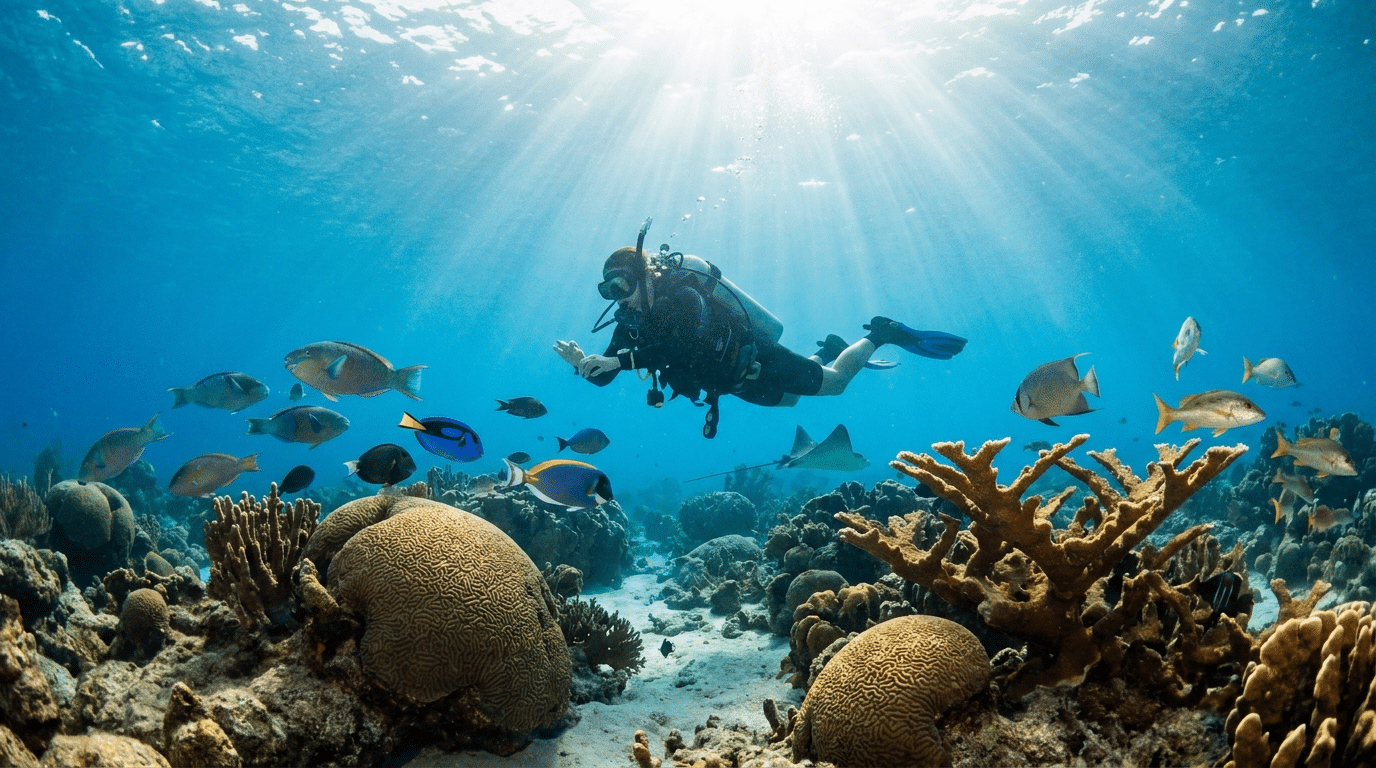
Looe Key is a spur-and-groove reef, so you’re diving across coral “fingers” separated by sandy channels. You’re not dropping onto a wall or drifting over flat bottom. You move through a reefscape with real texture to it: coral heads, ledges, grooves, swim-through-style structure, and bright sand bouncing sunlight back up through the water.
By scuba standards the reef is shallow. Scuba Schedules lists Looe Key at an average depth of 15 feet and a maximum of 30 feet, with the reef ranging from 7 to 30 feet on its dive-site description. Captain Hook’s local guidance treats the broader Looe Key profile as roughly 5 to 35 feet depending on the mooring and the conditions that day.
That shallow profile is what gives the dive its relaxed rhythm. Newer open-water divers aren’t staring down into blue nothing, and experienced divers get to slow right down, poke into cuts and ledges, and watch the fish instead of babysitting a demanding profile. This isn’t a deep, technical, or advanced-only dive. It’s a lively Lower Keys reef dive that rewards good buoyancy, a little patience, and some reef awareness.
Who Should Dive Looe Key?
If you’re already open-water certified, Looe Key is about as approachable as reef dives get in the Lower Keys. If you’re not certified, you can still experience the reef, but you’ll want the right activity for it rather than a standard certified-diver trip.
| Diver or group type | Best fit | What to know before booking |
|---|---|---|
| Certified newer diver | Looe Key scuba trip | Shallow reef, bright water, and easy profiles make it a comfortable choice when conditions cooperate. |
| Experienced reef diver | Looe Key scuba or two-site reef outing | Come for the structure, fish life, and relaxed dive pace rather than depth or technical challenge. |
| Not scuba certified | Intro/Discover-style scuba option or snorkeling | You should not book a standard certified-diver trip unless you hold the required certification. |
| Mixed group | Scuba for certified divers, snorkeling for non-divers | Plan around the least-experienced person so everyone gets the right reef experience. |
Still weighing scuba against snorkeling? Captain Hook’s guide to scuba diving vs. snorkeling can help you decide. Non-divers can look at Looe Key snorkeling from Big Pine Key, and anyone who wants to get certified can start with Florida Keys scuba diving courses and trips.
The Reef Layout: Spurs, Sand Grooves, Ledges, and Life
On a Looe Key dive, the structure does a lot of the guiding for you. The coral spurs form natural lanes. The sand grooves give you visual reference points and open patches where you can pause, sort out your buoyancy, and regroup. Most dives follow the reef contours instead of running a straight line. You might trace one coral finger for a while, then cross a sandy groove to the next section. The ledges and undercuts are where you’ll want to slow down. That’s where the bigger animals rest, where moray eels tuck back into the reef, and where a careful diver spots all the small stuff that’s easy to fin right past.
A single dive gives you a focused look at one part of the reef. A two-tank outing lets the crew pick a second mooring or a nearby site based on conditions. Newfound Harbor Key, a shallower reef area close by, often pairs well with a mixed group or works as a good second dive when the day cooperates.
Marine Life You May See
Looe Key runs the classic Lower Keys cast:
- schooling reef fish
- snapper
- grunts
- parrotfish
- angelfish
- keep an eye out for nurse sharks, barracuda, green moray eels, turtles, rays, and every so often a goliath grouper.
The coral scene mixes elkhorn, staghorn, and brain coral with the spur-and-groove formations that give the reef its shape. Bring your curiosity and hold your expectations loosely. What shows up depends on the day, the season, current, visibility, and plain old ocean luck. The trick is to slow down. A relaxed diver with good buoyancy almost always sees more than the one racing from coral head to coral head.
Want to compare Looe Key with other reef and wreck options? Start with Captain Hook’s guide to the best places to dive in the Florida Keys.
Getting There: Why Big Pine Key Is the Practical Launch Point
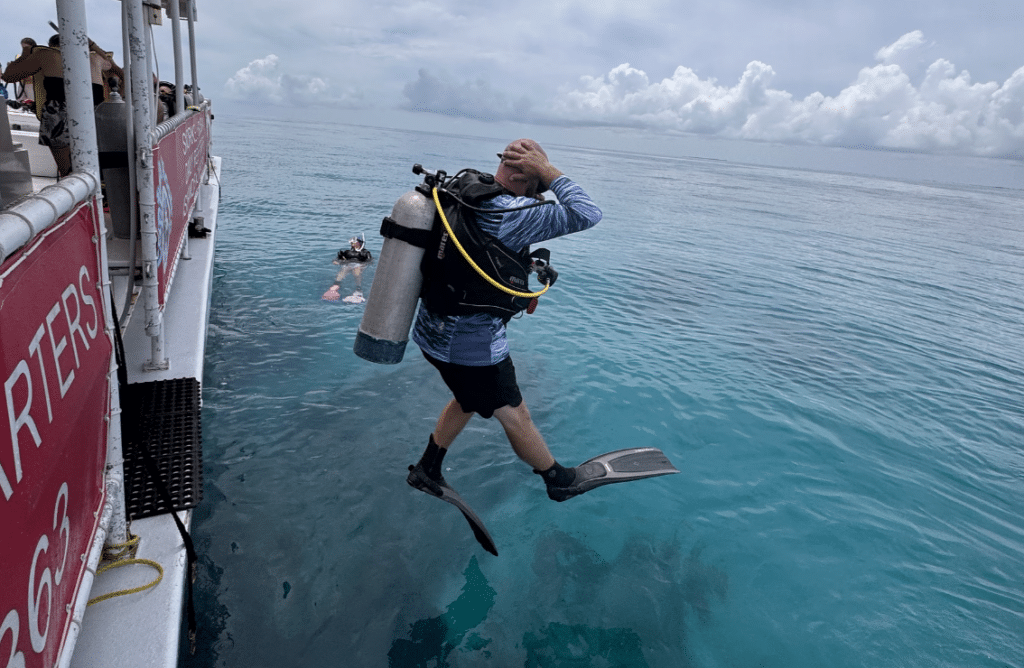
Looe Key is offshore and boat-access only. It’s roughly 6 miles off Big Pine Key and Ramrod Key and notes that the reef can only be reached by boat. If you’re planning the day, that puts the Big Pine and Ramrod area squarely in the frame as your departure zone.
Captain Hook’s runs Looe Key trips from its Big Pine Key scuba diving location, which keeps the logistics simple when this reef is the target.
Staying in Key West?
You can still dive Looe Key, but plan around the drive up to the Lower Keys rather than assuming every Key West dive shop heads there. And if you’re farther up the island chain, Captain Hook’s also has Marathon scuba diving for days when a different reef or wreck makes more sense.
Sanctuary Rules and Reef Etiquette
Looe Key sits inside the Florida Keys National Marine Sanctuary, so how boats and divers use the reef is baked into the dive plan. Boats tie to mooring buoys rather than anchoring on the reef. Expect dive-flag procedures and a clear set of instructions from the crew before anyone goes in.
It’s a no-take reef zone as well. No spearfishing, no collecting, no removing marine life from the reef. Your job down there is simple: look, enjoy, take a photo if you want, and leave the reef exactly the way you found it.
Good reef etiquette starts before you giant-stride in. Use reef-safe sun protection, secure any dangling gear, check your weighting, and keep your fins off the coral. Newer to scuba? Captain Hook’s first scuba dive preparation guide walks through the basics so you show up calmer and readier to enjoy the dive.
How a Looe Key Dive Trip Usually Works
Think of a Looe Key outing as a reef trip built around the day’s conditions. You check in, sort out your gear, ride out by boat, tie up to a mooring, listen to the briefing, and dive the plan the crew sets for that stop. On two-dive outings the captain may pick a second mooring or a nearby reef based on wind, current, visibility, and what the group needs.
Conditions in the Keys shift fast. Visibility, current, surface chop, and the mooring choice are all day-by-day calls. Before you head out, check Captain Hook’s current dive conditions and stay flexible. A good reef day is part planning, part local judgment, and part letting the ocean be the ocean.
Bring your certification card, swimsuit, towel, sun protection, and any personal gear you like to dive. Rental gear is available if you need it, and you can browse snorkel and dive gear for sale if you’re building out your own kit.
Why Dive Looe Key with Captain Hook’s
When Looe Key is the goal, leaving from Big Pine Key keeps the whole day pointed at the reef you came to see. Captain Hook’s Big Pine Key dive shop is the closest practical Captain Hook’s departure for Looe Key, with local crews who know how the reef behaves across shifting winds, visibility, and mooring options. You also get the backup of a dive operation with three Florida Keys locations: Big Pine Key, Marathon, and Key West. If conditions favor a different part of the Keys, the team can point you toward the best available plan instead of forcing one idea onto the wrong day.
Captain Hook’s is family-owned and locally rooted, known across the Keys for scuba, snorkeling, fishing, rentals, gear, and repair. The vibe is friendly and relaxed, but the operation has more 5 star reviews than just about anybody in the Keys.
Book Your Looe Key Dive from Big Pine Key
If Looe Key is the reef you want, start with Captain Hook’s Big Pine team. You get the practical departure point, a crew that knows the Lower Keys reef system, and a dive profile that works beautifully for certified divers after a bright, fishy, all-levels reef.
- Learn more about Big Pine Key scuba diving
- Go straight to book your Big Pine dive trip
Frequently Asked Questions
Is Looe Key good for beginner scuba divers?
Yes, as long as you are already open-water certified and comfortable in the water. Looe Key is shallow, bright, and reef-focused, so newer certified divers usually find it easier than deeper or more current-heavy dives. If you are not certified yet, snorkeling or an introductory dive is the better fit.
How deep is Looe Key reef diving?
Looe Key is a shallow reef dive, not a deep one. Different sources describe the reef in the roughly 7 to 30 foot range, with local trip planning often treating it as about 5 to 35 feet depending on the exact mooring and conditions.
Do you need to be certified to dive Looe Key?
Yes, you need an open-water scuba certification for a standard dive trip. If you are not certified, you can still experience the reef through snorkeling or an intro-style scuba experience, but not as a regular certified diver.
Where do Looe Key dive trips leave from?
The practical departure point is the Big Pine Key and Ramrod Key area. Captain Hook’s runs Looe Key trips from its Big Pine location, which keeps the boat ride short and the planning simple. If you are staying in Key West, you will usually need to factor in the drive to the Lower Keys.
Can you spearfish or collect at Looe Key while diving?
No. Looe Key is inside the Florida Keys National Marine Sanctuary and is treated as a no-take reef area, so collecting and spearfishing are not part of the dive. Divers should leave marine life and coral exactly as they found them.
What should I bring for scuba diving Big Pine Key to Looe Key?
Bring your certification card, swimsuit, towel, reef-safe sun protection, and any personal gear you prefer to dive with. If you do not own everything yet, rental gear is available, and it helps to check current dive conditions before you head out.