
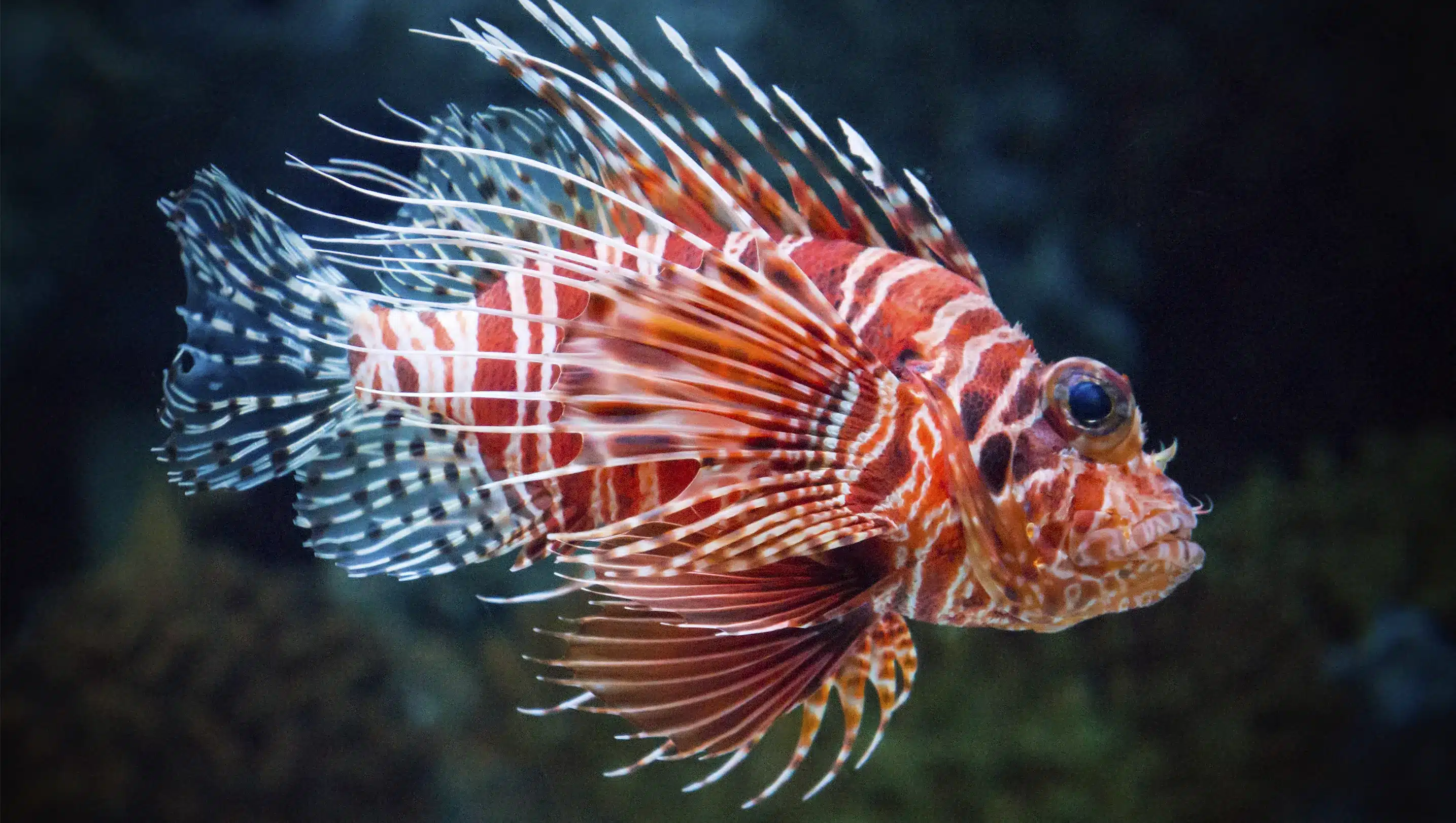
The beautiful Florida Keys are facing a significant threat from an invasive species: the lionfish. A lionfish is a striking, venomous reef fish native to the Indo-Pacific, easily recognized by its bold red-and-white stripes and fan of spiny fins. Since being introduced to the Atlantic Ocean, these predators have been wreaking havoc on local marine ecosystems, including the reefs we dive every day out of Marathon. This post covers everything you need to know about lionfish, including why they are invasive, how they got here, key lionfish facts, and what we can all do to stop them.
Why Are Lionfish Invasive?
Lionfish are highly invasive due to their insatiable appetites, rapid reproduction and lack of natural predators in the Atlantic. These voracious predators consume small reef fish, juvenile grouper, and snapper, essential species for maintaining the ecological balance of our coral reefs. As a result, lionfish are outcompeting native species for food and habitat, leading to significant disruptions in the natural food chain and the overall health of our marine ecosystems.
How Did Lionfish Get to Florida?
Lionfish were likely introduced to Florida waters through the aquarium trade in the 1980s. The first confirmed Atlantic sighting was recorded off Dania Beach, Florida, in 1985, and genetic studies suggest the invasion came from multiple separate aquarium releases rather than a single event. Accidental releases or intentional dumping of aquarium specimens into the ocean allowed lionfish to establish themselves in the Atlantic. Since then, their population has exploded, particularly in areas like the Florida Keys.
Facts About Lionfish
Lionfish, with their striking appearance and venomous spines, are among the most captivating yet concerning marine species. Understanding more about their biology, behavior and impact can help in efforts to control their population and protect native marine life.
What Does a Lionfish Look Like?
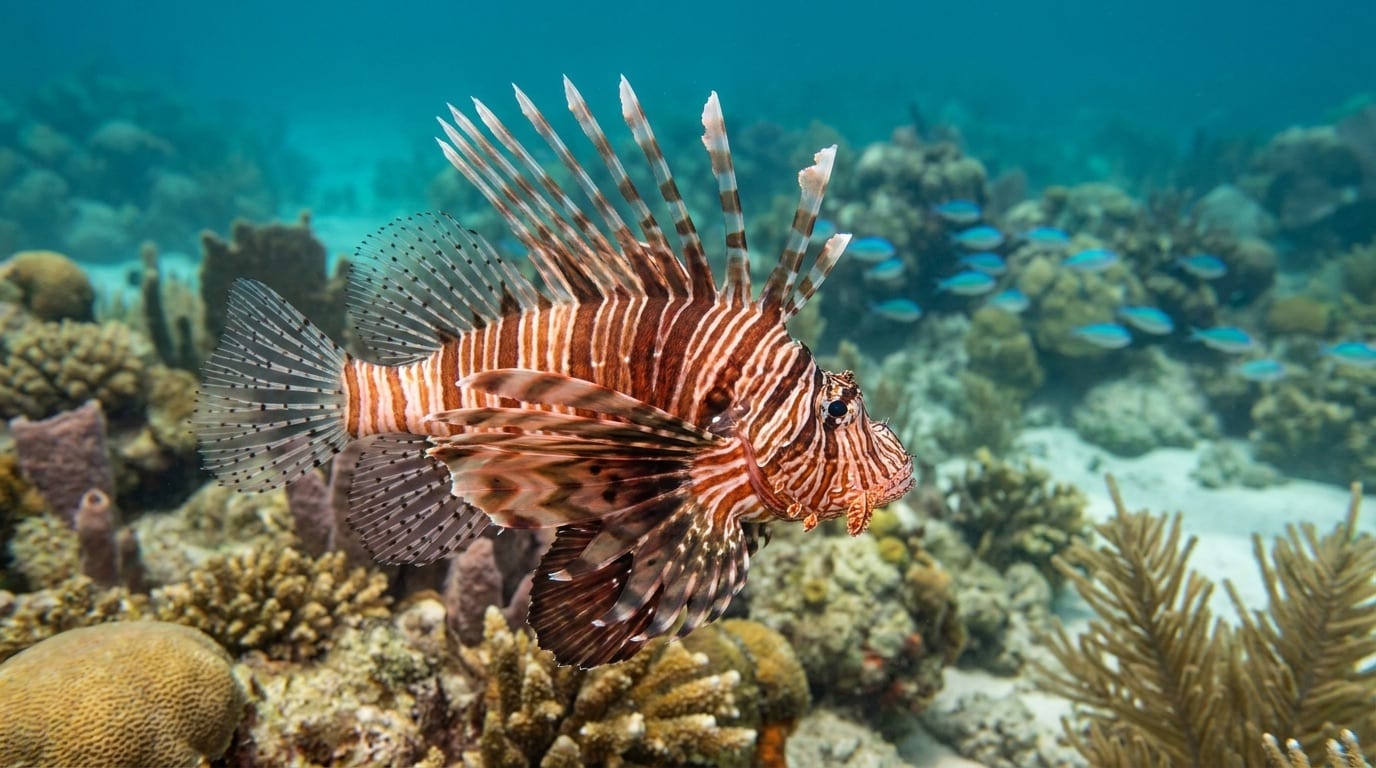
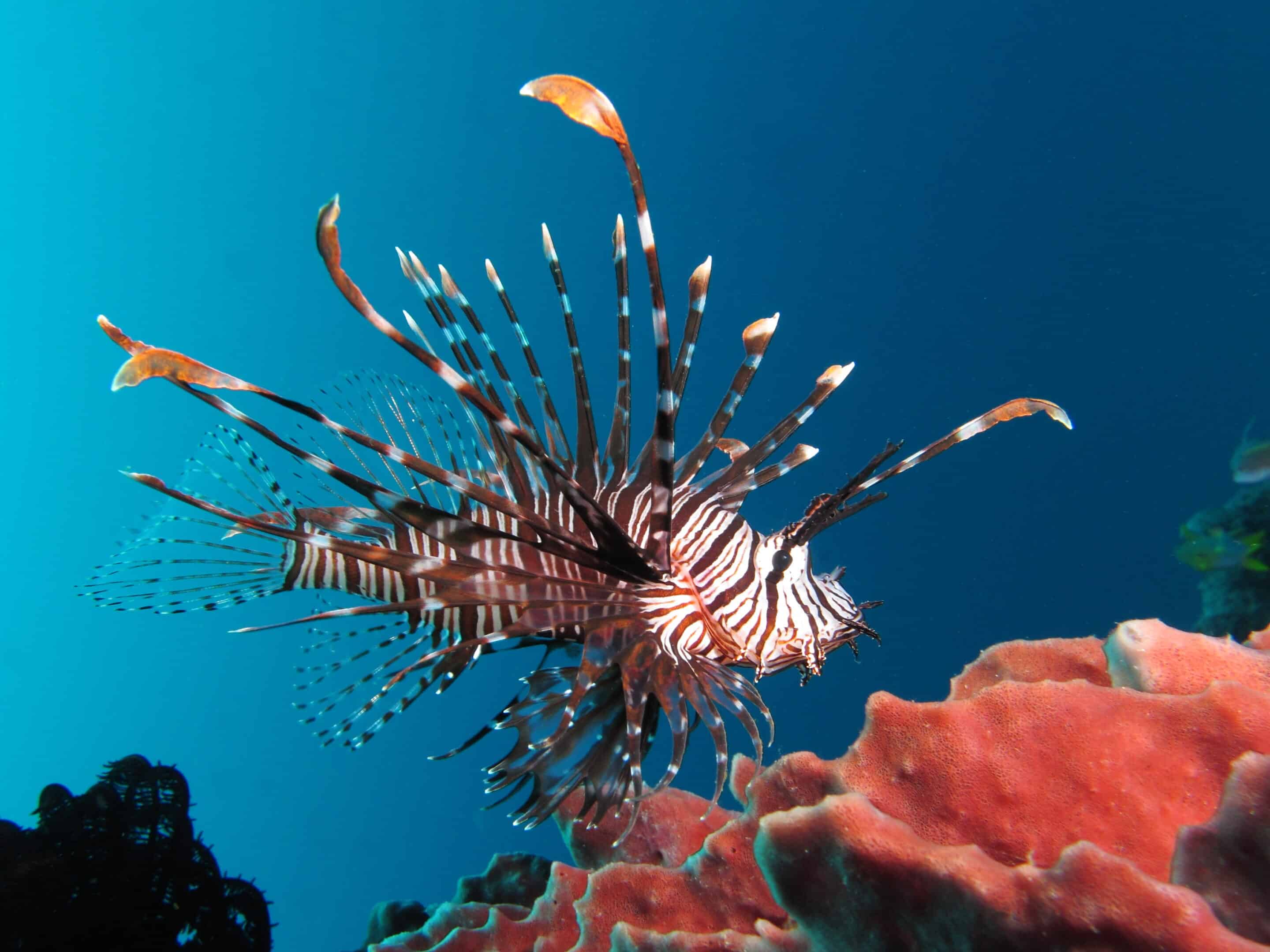
Lionfish are hard to mistake for anything else on the reef. They are small, typically 12 to 15 inches long, with dramatic red, brown, and white vertical stripes. Their most recognizable feature is a fan of long, feathery pectoral fins and a crown of tall dorsal spines that give them their “lion’s mane” look. Those flowing fins are beautiful, but the spines behind them are venomous, so this is a fish you admire from a safe distance.
Are Lionfish Poisonous?
Lionfish are venomous, not poisonous. They carry 18 venomous spines that deliver a painful sting if you touch them. Stings are rarely fatal, but they can cause severe pain, swelling, and more serious reactions in some people. The good news for divers and diners alike: once those spines are removed, the flesh of a lionfish is completely safe to eat and is considered a delicacy by many.
What Do Lionfish Eat?
Lionfish have a varied diet, primarily consisting of small fish, crustaceans, and invertebrates. They are known to consume over 70 different species, including many important to the reef ecosystem. This diverse diet and their high consumption rate make lionfish particularly damaging to local marine environments.
Can You Hunt Lionfish?
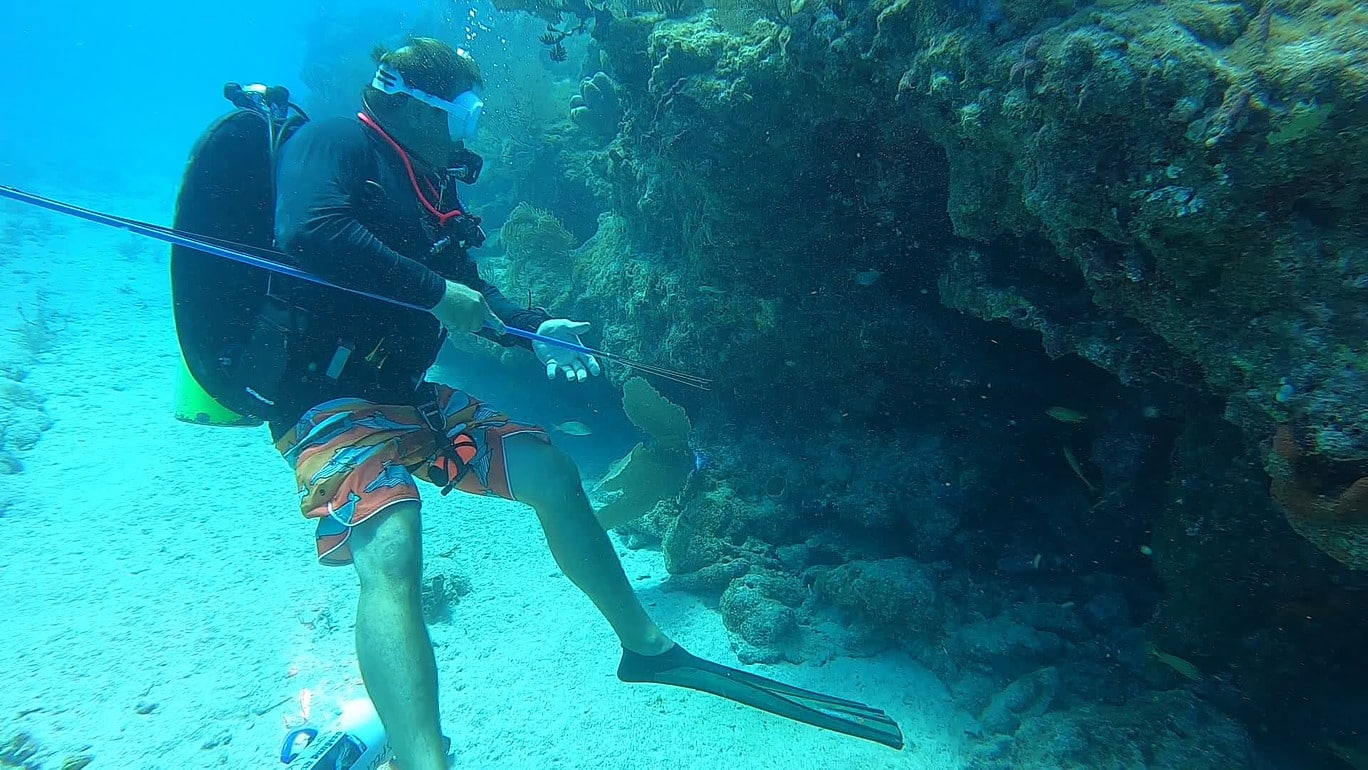
Active removal of lionfish is essential to control their population. Lionfish hunting involves spearing and capturing these invasive fish, which helps protect native species and preserve the health of coral reefs. We regularly find lionfish on the reefs and wrecks we dive around Marathon, including Sombrero Reef and Coffins Patch, which is why targeted removal matters so much. In the Florida Keys, organizations and dive shops have taken the lead in organizing lionfish hunting efforts.
Can You Eat Lionfish?
Absolutely! Lionfish is a delicious fish with a delicate, mild flavor, often compared to grouper or snapper. By eating lionfish, we can help reduce their numbers while enjoying a tasty meal. The “Eat Them to Beat Them” campaign encourages consumers to include lionfish in their diets, turning this invasive species into a popular menu item.
Lionfish in the Florida Keys
- Population Growth: Since their introduction, lionfish populations in the Florida Keys have grown exponentially. In some areas, they have been found at densities of more than 200 adults per acre.
- Reproductive Rate: A single female lionfish can produce up to 2 million eggs per year, contributing to their rapid spread.
- Feeding Habits: Lionfish can reduce the population of juvenile native fish on a reef by up to 90% within just five weeks of establishing themselves in a new area.
- Predation Impact: Studies have shown that lionfish can consume prey species at a rate of up to 5.5% of their body weight per day, significantly impacting the local fish populations.
- Invasion Extent: Lionfish have been spotted as far north as North Carolina and as far south as Brazil, with a significant presence throughout the Caribbean, Gulf of Mexico, and the Atlantic coast of Florida.
- Control Efforts: In areas where targeted removal efforts are implemented, lionfish populations can be reduced by up to 75%, demonstrating the importance and effectiveness of active management.
- Economic Impact: The lionfish invasion poses a threat to the fishing and diving industries, as it disrupts the ecological balance essential for these sectors.
Captain Hook’s Strategy to Tackle the Florida Keys Lionfish Invasion
Our dive staff at Captain Hook’s Dive Center is dedicated to combating the lionfish invasion. We have developed a specialty class to teach divers the most effective and environmentally sound methods for harvesting lionfish. This course includes a classroom session followed by a hands-on dive, where participants learn to catch, clean, and prepare lionfish for consumption. Not only is this a fun and educational experience, but it also contributes to the control of lionfish populations.
If you are not a diver but want to help, there is a saying “Eat Them to Beat Them.” Yes. Lionfish has a unique taste that is often described as delicate, mild, and similar to other white fish species. The flesh of lionfish is white, tender, and has a slightly sweet flavor. Some people compare the taste to grouper or snapper. So it is a strategy that is both beneficial to consumers and to the environment by helping to control their population by making them a popular menu item.
So together, let’s unite in the fight against the lionfish invasion! By actively harvesting and eating these invasive creatures, we can protect our native fish, preserve the health of our coral reefs, and ensure a sustainable future for the Florida Keys. Together, we can “Make a Difference” in safeguarding our unique marine ecosystem. Let’s dive in and take action! If you have any questions, feel free to contact us at our dive shop in Marathon!